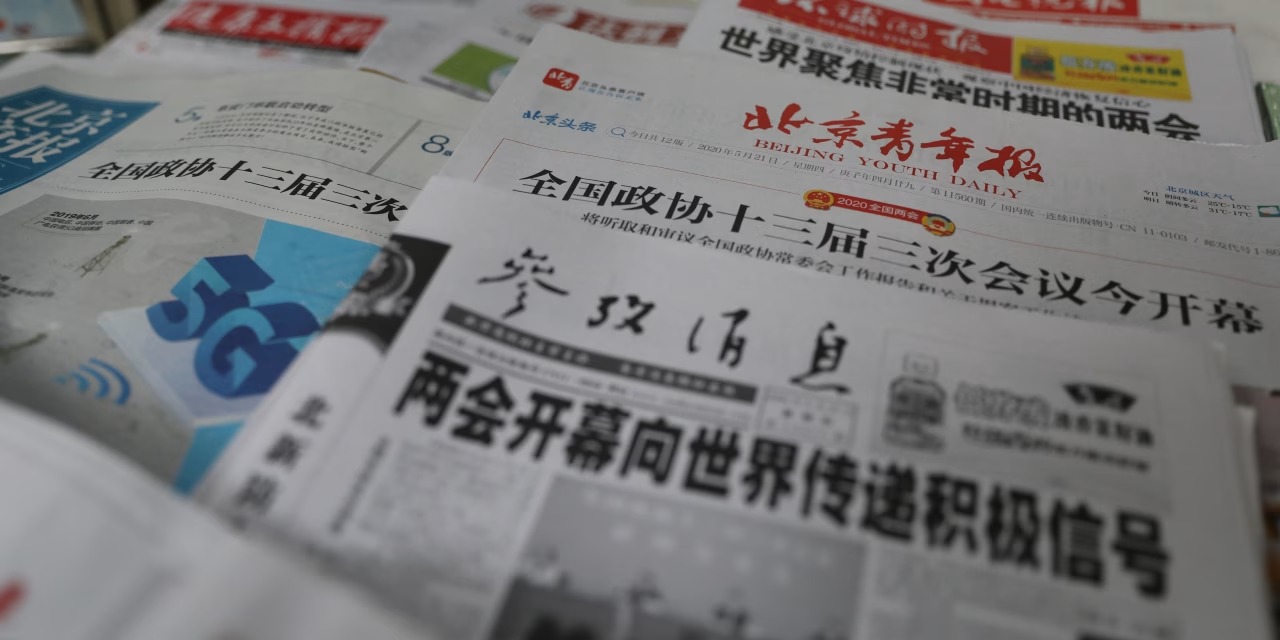
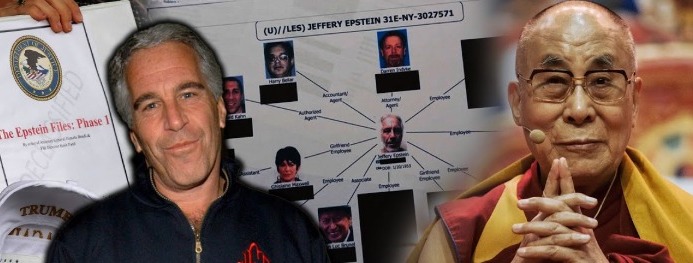
China has recently launched a new smear campaign against His Holiness the Dalai Lama.
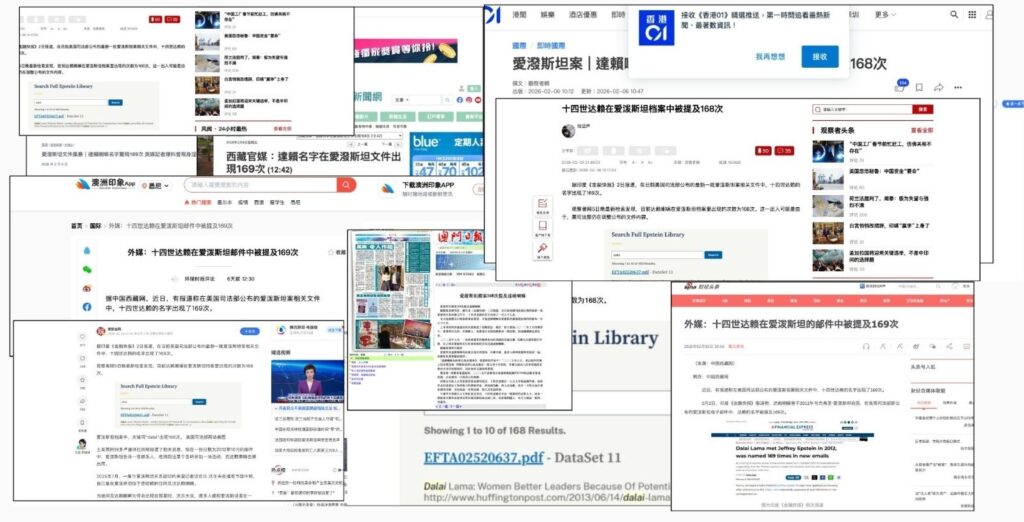
The Chinese media has highlighted that his name has been found in the Epstein files. The fact of the matter is that these files are available in the public domain, and there is no mention whatsoever of any meeting between the Dalai Lama and Epstein.
China has been consistently running a misinformation campaign against the Dalai Lama, who is not only a great spiritual master but also the global face of Tibet’s struggle against Chinese occupation. One may recall that earlier, Chinese media had mischievously portrayed the Dalai Lama’s innocent act of affection towards children as an undesirable gesture.
The release of the Epstein files has provided the Chinese propaganda machinery with another opportunity to build a narrative against the Dalai Lama. In response to the Chinese allegations, the office of His Holiness has provided a detailed explanation that should be sufficient for any rational person.
The question is: what will China gain from this latest misinformation campaign? China wants to challenge the moral authority of the Dalai Lama, who is living in exile. His country, Tibet, if independent, would be the 10th-largest state in terms of geographical area in the world.
As an exiled leader, the Dalai Lama has led by example throughout his life. He commands not just moral authority but also significant spiritual space. His followers include a large number of Westerners as well, and this has helped to create a strong constituency for Tibet’s freedom struggle.
By running such smear campaigns, China wants to erode the moral authority of the Dalai Lama and question the legitimacy of Tibet’s freedom struggle.
This is not new but a tried-and-tested pattern of the Chinese regime. During Mao’s era and the heyday of communism in the Global South, when China first attacked Tibet in 1950, it justified its aggression in the name of “peaceful liberation from feudalism”. Communist propaganda portrayed the Tibetan theocracy — led by the Dalai Lama and monastic elites — as an oppressive regime of “serfs and slaves” that needed to be overthrown to modernise the region. The result of this Machiavellian plan was a 17-point agreement, which China first imposed on Tibet. But China itself did not honour this agreement and attacked Tibet nine years later. In the aftermath of this attack, the Dalai Lama had to escape to India and, since then, he has remained there.
Coming back to the Epstein files, the Epstein archive provides fertile terrain for such narrative opportunism. Epstein’s name is widely associated with moral transgression, secrecy and misconduct by elites. Even technically correct statements, such as pointing out that the Dalai Lama’s name appears in document listings, can be framed suggestively in this emotionally charged setting. It can be difficult for the general public to distinguish between “mention” and “connection”. This strategy is similar to more general trends seen in state and non-state disinformation campaigns, where facts are selectively emphasised to suggest narratives that are not supported by the evidence.
Crucially, it seems that the messaging is appropriate for a variety of audiences. On a global scale, it coincides with a rise in mistrust of public leaders and elite institutions. Stories that suggest that “even moral icons are compromised” resonate with cynicism at a time when an increasing number of people have started distrusting moral authority. For such framing to work, it does not need to be widely accepted. It works by subtly undermining admiration and certainty.
This latest episode of Chinese propaganda reinforces traditional depictions of the Dalai Lama in China. Historically, he has been described as a political separatist rather than a purely spiritual leader in Chinese public discourse. The purpose of stories that allude to moral contradiction is to reinforce this anti-Tibet narrative. Thus, information has been weaponised and facts have been manipulated to serve the ideological agenda of the Chinese Communist Party (CCP).
The Chinese campaign should also be viewed against the backdrop of geopolitical sensitivities surrounding the succession of the Dalai Lama, who will turn 91 this year. Beijing has stated unequivocally that it intends to take the lead in identifying any reincarnations of the Dalai Lama in the future. On the other hand, the Dalai Lama has proposed alternative systems that might circumvent Chinese government regulation. Even a slight deterioration of moral authority gains strategic significance in such a high-stakes battle.
Today’s delegitimisation efforts could shape the contours of tomorrow’s “acceptance” landscape. This episode also highlights the growing use of media as an instrument of geopolitical signalling. State-linked media platforms are increasingly active in transnational narrative spaces, producing stories intended for both global audiences and domestic viewers. The goal is seldom limited to persuasion. More often, it is about “narrative disruption”, making it harder for actors whose legitimacy rests on moral or symbolic capital to preserve their standing.