The fading aftermath of a lost battle continues to smoulder quietly, and for Pakistan’s armed forces—particularly its beleaguered army under its current Chief—these remnants represent not resilience, but a lingering, unhealed wound. This wound was inflicted by the overwhelming setback suffered during India’s precisely orchestrated Operation Sindoor. The mission effectively laid bare the vulnerabilities and superficial nature of Pakistan’s covert strategies along the Line of Control (LoC). In the wake of this defeat, the response from Pakistan was not one of reflection or strategic recalibration, but rather a recommitment to exhausted methods—chiefly, the long-standing practice of sponsoring terrorism. This shadow conflict, which Pakistan has cultivated for decades, has recently been reignited with intensified zeal and even more ominous intent. Operation Sindoor dismantled the myth that the Pakistan Army maintains superiority in asymmetric warfare across the LoC. Employing intelligence-led targeting, coordinated civilian-military operations within Kashmir, and precision strikes, India succeeded in destroying several of Pakistan’s key terrorist infrastructure points. Numerous high-ranking handlers, operating in proximity to frontline military positions, were also neutralised. Pakistan’s infamous Border Action Teams, unprepared for the scale and precision of the assault, suffered significant losses. Reinforcements dispatched under the assumption of surprise advantage were instead ambushed with lethal efficiency. Conservative estimates suggest that more than 70 Pakistani regular troops and special forces were either killed or incapacitated in the course of the operation. However, these figures remain unacknowledged by Pakistan’s military media wing, the Inter-Services Public Relations (ISPR), based in Rawalpindi.
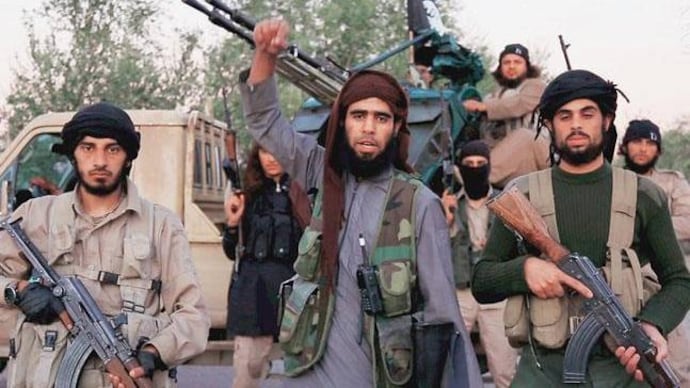
The consequences extended beyond a mere tactical defeat—it marked a profound symbolic breakdown. The veil was lifted, revealing to the international community the unmistakable nexus between the Pakistan Army and terrorist organisations falsely presented as ideological movements. As Pakistan’s military leadership staggered under the impact—wounded both physically and psychologically—it did not pursue introspection or institutional reform. Instead, its response was fuelled by vengeance. With its credibility in tatters and domestic cohesion eroded by mounting economic distress, the military hierarchy resorted to its familiar playbook: reinforcing the architecture of cross-border terrorism. Within the rugged landscapes of Pakistan-occupied Kashmir (PoK), a fresh wave of militant training camps began to emerge—spreading like malignant growths. The same geography that once served as refuge for insurgents in the early 2000s is being repurposed—not to defend, but to initiate offensive operations aimed at infiltration and sabotage. These installations are far more advanced than rudimentary jungle shelters; they are heavily fortified compounds, featuring structured obstacle courses, dedicated firing ranges, encrypted communication hubs, and efficient logistics chains—all operated with military-level discipline and overseen directly by Pakistani officers of field rank.
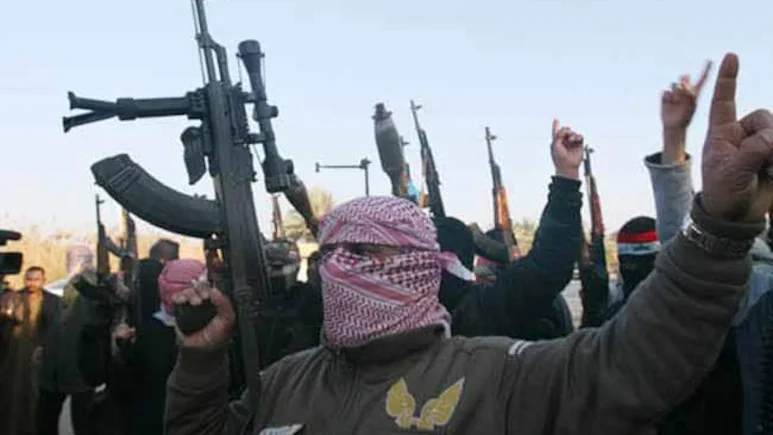
In the interior regions of Pakistan-occupied Kashmir (PoK), satellite surveillance and signal intelligence have revealed a notable uptick in activity linked to operatives of Jaish-e-Mohammed and Lashkar-e-Taiba—groups ostensibly proscribed by Pakistan but, in reality, sustained and armed by its military-intelligence apparatus. Historic infiltration routes through Kupwara, Uri, and Poonch are being revitalised, now augmented with modern techniques involving drone-based supply drops, underground tunnel systems, and nocturnal incursions enhanced by GPS jamming technologies. The danger lies not in covert denial, but in a conscious intensification of hostile intent. The Chief of the Pakistan Army, acutely conscious of the country’s precarious diplomatic and economic condition, is engaging in a hazardous strategic gamble. With increasing scrutiny over his leadership both within military circles and among the broader public, he appears driven to recapture a faltering narrative through the use of “strategic proxies.” Terrorism remains the most potent instrument in Rawalpindi’s longstanding arsenal—an instrument now employed with alarming recklessness. His leadership, beleaguered by internal factionalism and an unparalleled erosion of legitimacy, seems fixated not on reform or peaceful coexistence, but on expanding clandestine conflict. Alarmingly, this ideological decay is no longer confined to PoK. The most disconcerting evolution is now taking root within Pakistan’s Punjab province. Once regarded as the cultural nucleus and a relatively secular space in the national context, Punjab is experiencing a covert revival of urban terror infrastructure. In cities such as Lahore, Bahawalpur, and Multan, dormant terrorist cells are being discreetly reactivated. These are not improvised militias of disenfranchised youth armed with outdated weapons; they are increasingly professionalised units under the instruction of retired ISI personnel, many of whom now operate under the guise of NGOs, charitable entities, or religious seminaries. These fronts offer both ideological justification and logistical support for what appears to be a quietly resurgent domestic terror ecosystem.

Amidst an ongoing civil-military power struggle, one aspect of the Pakistani state’s machinery remains untouched: the consistent prioritisation of defence funding and so-called “strategic programmes.” Despite a population grappling with soaring prices of basic commodities such as wheat and petrol, billions of rupees continue to be funnelled into clandestine military activities. International aid, ostensibly allocated for flood recovery and infrastructure development, has seemingly vanished into unaccounted defence-related expenditures. The directives issued by the Army Chief appear concerned less with professional armed forces modernisation and more with psychological operations, refining doctrines of insurgency, and sustaining strategic equilibrium through non-state proxies rather than overt confrontation. Ironically, this intensified focus on exporting militancy coincides with the military’s own struggle against a growing insurgency within national borders. The tribal regions, once controlled through sheer force and temporary truces, are experiencing renewed unrest. Militant organisations such as the Tehrik-i-Taliban Pakistan (TTP), emboldened by regional instability and the decline of American presence in Afghanistan, have launched an aggressive internal campaign, particularly in Khyber Pakhtunkhwa and Balochistan. These insurgents have evolved beyond hit-and-run tactics; they now execute coordinated ambushes, capture military outposts, and even target mid-level officers for assassination. By conservative estimates, the Pakistani military has suffered more than 400 fatalities from militant assaults within its own borders over the past year. In North Waziristan alone, targeted attacks since January have claimed the lives of at least 80 soldiers. Yet, in the face of such heavy losses, the Army Chief’s priorities appear skewed—focused less on internal security and more on provoking tensions across the Line of Control. It seems the military establishment has acquiesced to a state of perpetual violence, both domestically and externally, in a bid to uphold its strategic narrative. Even more troubling is the army’s renewed alignment with radical ideological movements. A network of newly established madrasas—many reportedly funded by Wahhabi donors from the Gulf—has emerged across southern Punjab and rural Sindh. These institutions are not simply centres of religious study but have become active recruitment hubs. Children are subjected to extremist indoctrination, trained in the use of firearms by adolescence, and taught to view martyrdom across the LoC as a sacred obligation. Intelligence surveillance has recorded a 40% surge in new recruit movement towards training facilities in PoK, signalling that the terror infrastructure is not merely operational, but expanding at an alarming pace.
In recent months, Indian intelligence agencies have intercepted a number of disturbing communications. In one exchange, a Pakistani handler claims to have “fifty fresh mujahideen ready for deployment in Poonch.” In another, an ISI operative provides precise instructions for drone drop locations within Indian territory. These individuals are not unsanctioned actors; rather, they operate openly under the protection of the military, frequently utilising official vehicles and accessing military-grade hardware. Simultaneously, Pakistan’s diplomatic representatives persistently deny any involvement by the state. However, the emerging pattern is far too consistent, deliberate, and institutionally embedded to be dismissed as coincidental. Repeatedly, whenever Pakistan experiences internal turmoil—be it economic hardship, political instability, or military dissent—it reverts to its traditional strategy of asymmetric aggression. A noticeable increase in ceasefire violations often follows periods of domestic unrest. Likewise, each instance of public criticism directed at the Army Chief seems to coincide with a renewed infiltration effort across the Line of Control.
Pakistan’s current strategy reflects both desperation and peril.
For a nation grappling with a crisis of legitimacy, burdened by mounting debt, and increasingly isolated on the international stage, the promotion of terrorism has ceased to be merely a tactic—it has become a lifeline. However, the consequences of this approach are proving to be overwhelmingly detrimental. With a society marked by deep internal fractures, a politically polarised environment, and a growing insurgency, the country teeters on the brink of internal collapse. Despite this, its military leadership remains fixated on outdated notions, still pursuing the illusion of strategic depth that effectively disappeared decades ago. The current course charted by the Army Chief reflects not a path towards military success, but one of reckless obstinacy. By continuously dispatching more terrorists across the Line of Control, he not only provokes a more capable adversary, but also accelerates the erosion of Pakistan’s future under the crushing weight of its own misguided ambitions.