In Balochistan, Pakistan’s largest yet most marginalized province, a grim pattern has become all too familiar wherein buses are stopped, passengers segregated, and innocent civilians. The victims are often chosen based on ethnicity or government association before being executed in cold blood. On July 10, 2025, nine such passengers were killed by suspected Baloch insurgents in the Zhob and Loralai districts of Balochistan. It was initially claimed by Baloch Liberation Front (BLF), one of the oldest insurgent groups in Balochistan. It may be noted that several Baloch separatist outfits have escalated their insurgent campaign against the Pakistani state in recent years.
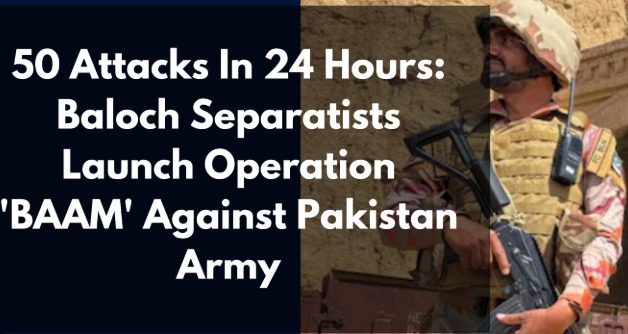
This attack is just one in a series of chilling episodes that have rocked the country’s fragile internal security landscape. It is merely three months from the hijacking of the Jaffar Express train by Baloch insurgents, which was seen as a blow to the military-led security establishment. It not only as an operational embarrassment for the Pakistani military but also as a stark reminder the state is not in control, at least not here. Because, here the Baloch insurgents struck not just at state infrastructure, but also at the very mythology of control cultivated by Pakistan’s powerful military over decades, signally Pakistan slipping back into a state of internal chaos.
These incidents point to an uncomfortable truth that the security in Pakistan is unravelling with the country’s periphery, particularly Balochistan, bearing its brunt.
According to a July 12 report by the Pakistan Institute for Conflict and Security Studies (PICSS), between July 4 and 10 alone, there were at least 27 instances of insurgent or militant violence, which led to 24 fatalities and more than three dozen injuries. It further highlighted that although the violence was widespread across the country, a disproportionately high number of violent incidents took place in Balochistan and Khyber Pakhtunkhwa (KPK), two areas that have long been neglected by the federal government and have endured Pakistan’s militarized governance for decades.
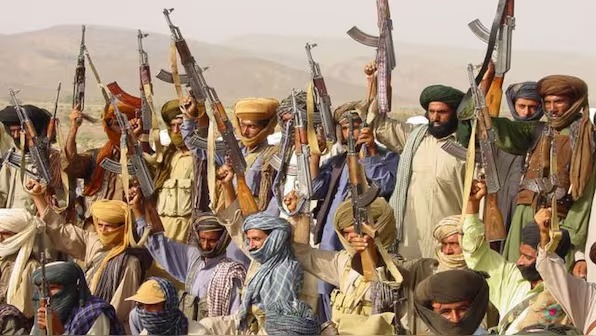
These two provinces have emerged as significant security challenges for the military establishment. Take the case of Balochistan. This resource-rich but with historical experience of continued political disenfranchisement has been simmering with resentment for decades. That resentment, once localized and fragmented, has in recent years transformed into a more coordinated and high-profile insurgency. Armed Baloch groups led by Baloch Liberation Army (BLA) have increasingly targeted not just state security installations and personnel and civilians presumed to be working for the state (collaborators)but also Chinese nationals working on infrastructure projects.
For much of its post-colonial existence, Pakistan has treated Balochistan with a mixture of indifference and coercion. Although the province constitutes nearly 44% of the country’s landmass and holds vast reserves of natural gas, coal, and minerals, it remains the least developed and most underrepresented region in national politics.
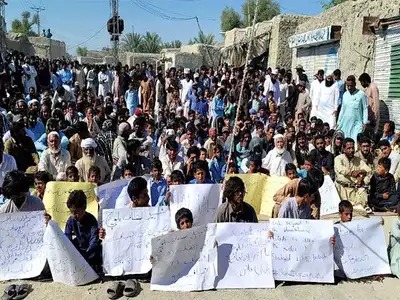
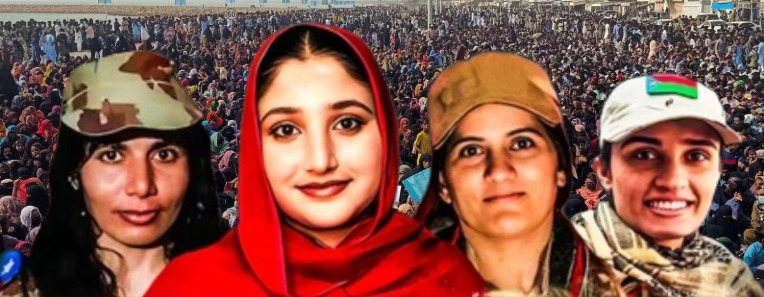
Protest in Balochistan as people demand justice amid rising terror
This neglect is not accidental but a structural. It is rooted in how Islamabad’s successive military dominated governments have viewed Balochistan through a narrow security lens. Instead of investing on integrating the local population into national political or economic frameworks, this militarized governance structure has a history of building garrisons and intelligence networks to rule the province with an Iron fist. As such, social sectors like education remain abysmal and infrastructure underdeveloped with scare avenues of employment for the locals. Such an approach has result in a deepening alienation, especially among the Baloch youth, many of whom now see insurgency not as extremism but as resistance. For many of them, the Pakistani state behaves in an imperialistic manner, interested in extracting provincial resources, while silencing local dissent.
While Balochistan remains the epicentre of anti-state violence, Khyber Pakhtunkhwa, especially its tribal hinterland, continues to be affected by heightened Islamist militancy. The reconstitution of Tehrik-i-Taliban Pakistan (TTP) and the regrouping of splinter jihadist factions have brought fresh violence to the region, including blowback militancy from groups once patronised by the military establishment. For instance, on June 28, at least 13 Pakistan army soldiers killed and a dozen others injured in a car bombing attack by TTP in North Waziristan district. While Islamabad has attempted to engage Pakistan Taliban, in what many described as mainstreaming process, it has failed to reign in the group which has upped its ante.
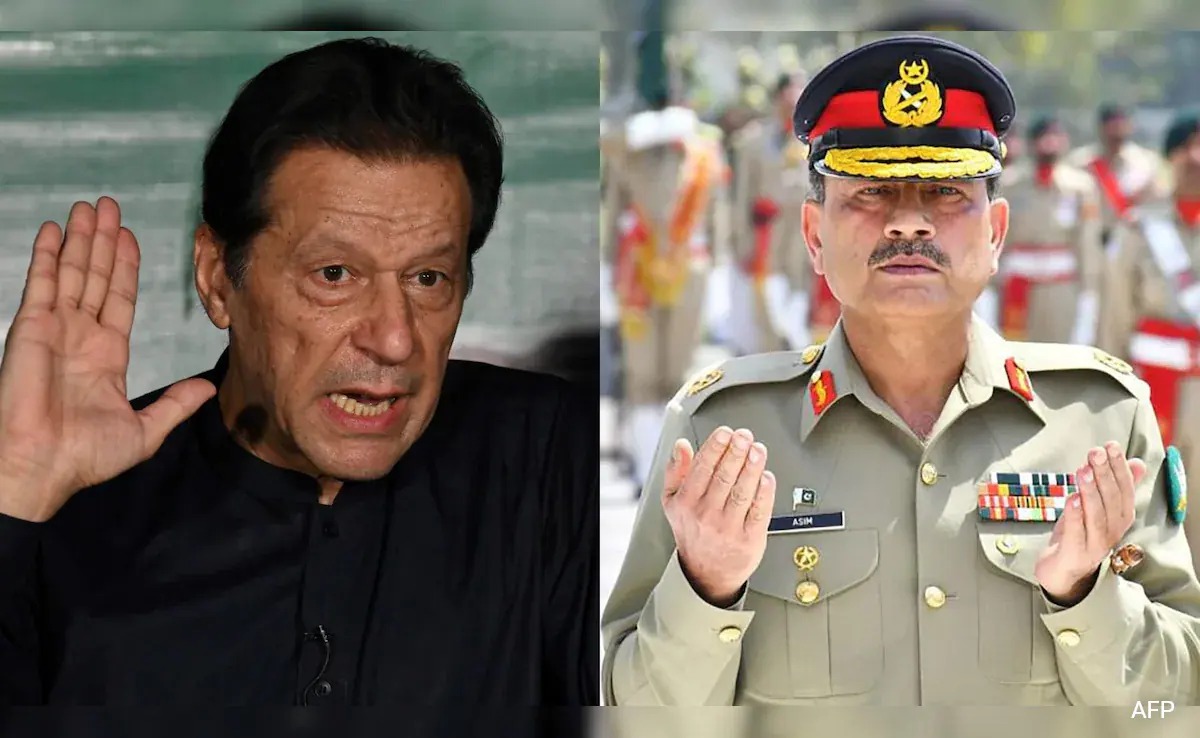
Pakistan’s worsening internal security is rooted in a doctrinal failure of Pakistan’s most powerful institution: the military. For decades, the Pakistan Army has acted as the ultimate arbiter of national stability. It has been the kingmaker in Islamabad, directed foreign policy, and controlled internal security operations.
But its strategic approach has often leaned heavily on tactical repression and short-term deals with militant proxies, many of whom have eventually turned rogue. Rather than pursuing an inclusive governance regime in the peripheries, the military often resorts to “shock and awe” operations, arbitrary detentions, and enforced disappearances, a feature of its (mis)conduct in Balochistan. This may have bought the military some time through temporary lulls in violence, it really has not shifted the root causes of unrest, which are political disenfranchisement, ethnic exclusion, and socioeconomic neglect.
Moreover, the Army has gotten dirtier with time and politics, and in so doing has reduced its legitimacy at least in part. Its role in propping up so-called hybrid regimes in Islamabad is one example. It is no longer seen as an independent force for good; it is considered a player on the bad side.
It is not merely a security failure that Pakistan is suffering today, rather it is a breakdown of the very social contract, if at all there existed one for the peripheries. When sections of the population feel excluded from political processes, denied economic opportunity, and in fact singled out by the very state that should protect them, insurgency begins to seem not merely possible, but inevitable.
Pakistani rulers would do better for the country by acknowledging what is happening across Balochistan and KPK cannot be vanquished through military operations. Nor can it be whitewashed by official narratives of “external sabotage” or “foreign conspiracies,” something that has become a too convenient tool lately to place all blame neighbouring countries. This unrest goes deeper and is symptomatic of a systemic failure to create an inclusive, equitable, and truly federal state.
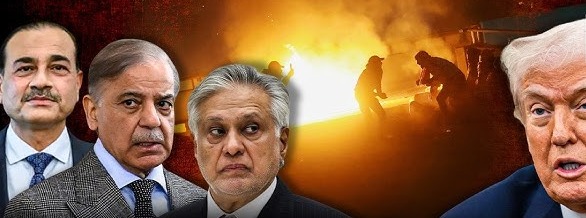
Unfolding circumstances demand that Pakistan’s military-dominated establishment and political elite, introspect on the policy approach towards these provinces. Their persistence to govern by coercion while neglecting regional empowerment will only push the crisis deeper. If one may argue, the semblance of control is fast disappearing, and the fires of dissent will stoke ever higher.
Pakistan stands at a crossroads. The surge in violence, especially in historically restive provinces like Balochistan and KPK, is symptomatic of a far deeper institutional rot. It is alarming that the very regions of the state that the current regime is attempting to quell are slipping further into chaos, not by virtue of a lack of power or firepower, but rather the absence of any serious political vision.
Pakistani rulers would do better by grasping the fact that real security cannot be built over “fear, exclusion, or propaganda”. They cannot speak of security unless it is grounded in justice, fairness, representation, and dignity of all citizens, irrespective of ethnicity, language, religion or region. Unless and until those holding power in Islamabad and Rawalpindi understand this, the question will not be how Pakistan restores security, but whether it can prevent the complete unravelling of its internal cohesion.