Strategic analysts say recent public statements by leaders linked to militant organisations in Pakistan point to a worrisome blurring of lines between the state and extremist groups, potentially reshaping the country’s security and foreign policy dynamics. Independent observers note that comments by well‑known militant clerics and figures suggest a shift in how Pakistan’s military establishment engages with both domestic proxies and foreign policy objectives—a development with implications for regional stability.
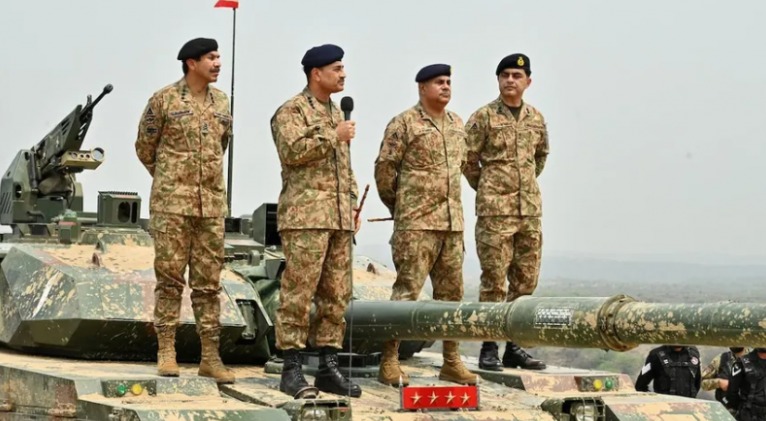
The debate was sparked after a senior cleric associated with a Pakistan‑linked militant ecosystem publicly praised the country’s military leadership and suggested alignment with national interests if regional demands were not met. Commentators say such public endorsements, historically rare, point to growing open synergy between certain militant factions and state actors, rather than covert cooperation that has defined past decades.
Analysts say Pakistan’s security establishment has long been accused of tolerating or even nurturing militant organisations for strategic purposes, including past conflicts in Afghanistan and Kashmir. Historically, groups like Lashkar‑e‑Toiba and Jaish‑e‑Mohammad have operated in ways aligned with Islamabad’s objectives, especially during times of regional tension. Critics argue that such relationships enabled irregular warfare strategies without clear accountability.
What is significant, experts point out, is not simply the existence of ties between militant networks and state elements, but the manner in which public rhetoric and symbolic endorsements are now entering mainstream discourse. By appearing to endorse top military leadership and make geopolitical demands through statements outside formal diplomatic channels, militant figures are perceived to be conveying a message that extremists enjoy tacit acceptance and may be deployed as instruments of influence.
Observers say these developments come at a time of heightened tension in South Asia, with Pakistan’s relationships with neighbouring countries — particularly Afghanistan and India — already strained by diplomatic and security disputes. Analysts warn that any apparent legitimisation of militant voices could complicate efforts at conflict resolution, cross‑border cooperation and counter‑terrorism initiatives, undermining official diplomatic engagement.
Concerns also extend to how such trends might affect Pakistan’s internal political environment. Critics argue that the increased visibility of extremist rhetoric could erode civilian authority and empower non‑state actors at a time when governance and democratic processes face significant challenges. Militant endorsement of state leaders could reinforce narratives that sideline institutional checks and balances, making it harder to pursue long‑term security reforms.
Pakistani military and government officials have not formally confirmed any change in policy regarding militant groups, often reiterating that security measures are focused on legitimate threats and national interests. However, analysts say the public prominence of militant voices cannot be separated from broader strategic calculations, noting that such dynamics reflect deeper issues in how Pakistan manages external threats, internal security and geopolitical relationships.
As regional powers watch these developments closely, diplomats and security experts emphasise the importance of transparent counter‑terrorism policies, strengthened institutional governance and renewed diplomatic engagement to prevent extremist actors from gaining undue influence over national policy.