
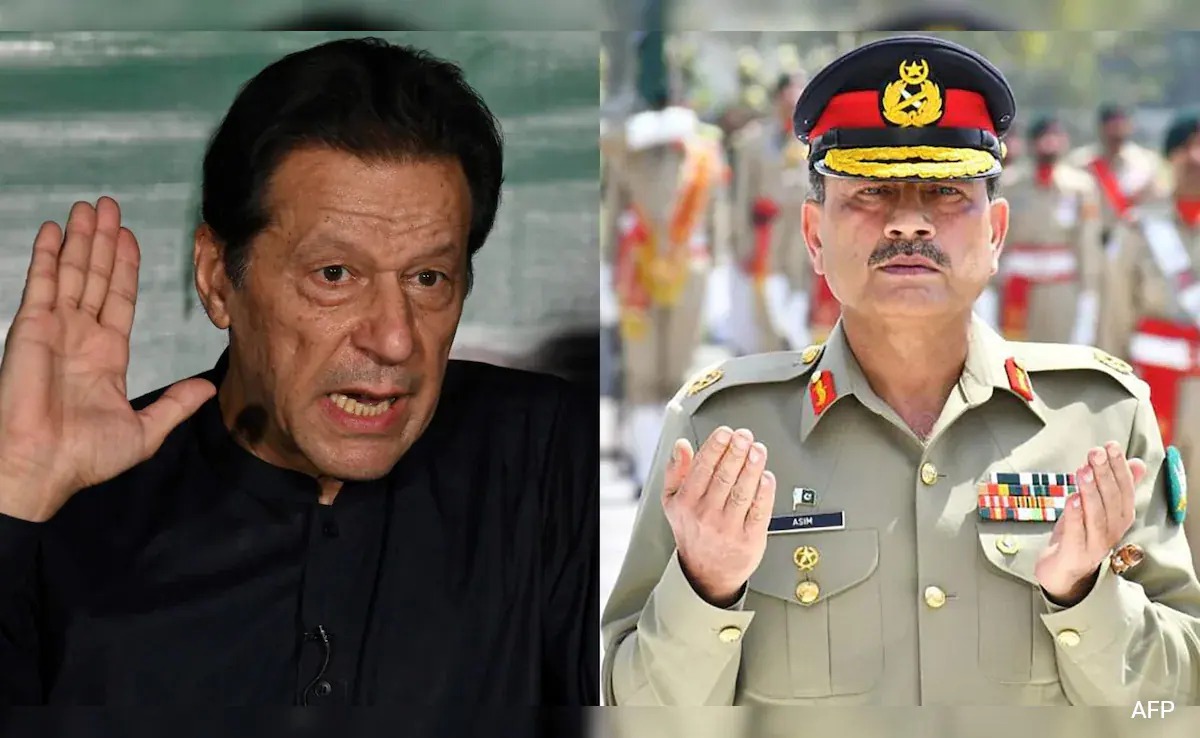
In Pakistan, power rarely disappears. It retreats, recalibrates, returns and often in uniform. Since the arrest of former Prime Minister Imran Khan in 2023, the country has been witnessing not merely the prosecution of a politician but the systematic erosion of any space for political dissent. Under Army Chief Field Marshal Asim Munir, Pakistan’s military establishment appears to have embarked on a deliberate, incremental campaign to marginalize and potentially erase its most formidable civilian challenger. The method to silence Khan has not been spectacular but rather procedural in character. From once being seen as the military’s preferred candidate to run the civilian façade of government, he remains imprisoned in Adiala jail under the shadow of the General Headquarters of Rawalpindi. Over the months that have followed since, reports of deteriorating health conditions emerged amid recurrent allegations of mistreatment including torture. While the state has expectedly denied these allegations, yet the recent reports that Khan suffering severe vision loss in his right eye after a medical procedure conducted clandestinely on January 24 night at Pakistan Institute of Medical Sciences (PIMS), have intensified concerns among supporters. The Supreme Court appointed amicus curie, Salman Safdar who met Khan at Adiala jail, told the court that the imprisoned former prime minister had list nearly 85 per cent of eye sight in right eye. Khan’s sister Noreen Niazi accused Army Chief Asim Munir of subjecting him to “unimaginable mistreatment.” Imran Khan, a global celebrity, a philanthropist, and former prime minister of Pakistan, has endured unimaginable mistreatment in prison under the directives of ‘Asim Law,’ now facing irreversible damage to his right eye as a direct consequence,” Noreen Niazi alleged in an X post, adding, “Why are they rejecting the supervision by Imran Khan’s personal doctors? Why are they rejecting the presence of Imran Khan’s family members? Our family is getting extremely worried. We do NOT accept any medical board they setup and control, we do NOT accept any report they manufacture! Family and personal doctors must be allowed to see Imran Khan!” Whether these claims are fully verifiable or not, but the political message of the state seems clear: isolation is the objective. the political message is clear: isolation is the objective. Khan has been denied consistent access to family members and his personal physicians whereas his communication with party leaders remains tightly restricted. In modern authoritarian playbooks, the most effective silencing is not necessarily physical elimination but enforced irrelevance. A leader cut off from his movement slowly loses the capacity to mobilize it. And it seems Asim Munir led establishment has decided its course over Imran Khan, which is silence through isolation. Yet Khan remains Pakistan’s most popular politician with multiple surveys by national and international continuing to place him far ahead of his rivals. For instance, a 2023 Gallup Pakistan report found that over 61 per cent of Pakistanis held a positive opinion of Imran Khan, significantly higher than his rivals. It is that enduring popularity which is precisely what makes him intolerable to the establishment. Interestingly, Khan’s relationship with the military was once considered as symbiotic. When he became prime minister in 2018, his opponents such as Pakistan Muslim League-Nawaz (PML-N) and Pakistan People’s Party (PPP), which are currently in the good books of army establishment, alleged that that his Pakistan Tehreek-e-Insaaf (PTI) benefited from military’s behind-the-scenes support during elections. While Pakistan’s generals have long shaped the country’s political order both overtly through coups and covertly through electoral engineering, Khan, at the time, appeared aligned with that system. But alliances in Pakistan’s civil-military matrix have always been transactional with Khan’s differences with military establishment on foreign policy and governance becoming visible in late 2021 and early 2022. And when the PTI government was removed through a parliamentary no-confidence vote in April 2022, many believed that Khan’s political rivals were nudged by General Bajwa from behind the scenes to engineer his ouster. And what followed after his removal was unprecedented as Khan did not retreat into quiet opposition. He directly accused the military leadership of political manipulation, including being part of a regime change operation with support from United States. While his rallies drew massive crowds, what was precedented was how for the first time in decades, a mainstream political leader openly named generals as political actors and seeking their return to barracks. For the military leadership that defiance crossed a red line as no one had ever questioned army even after losing wars with India or having the country axed into two in 1971 with the fall of Dhaka. With Asim Munir succeeding General Bajwa as the Army Chief in late 2022, the establishment’s response hardened. Many factors converged to supplement state’s response towards Imran Khan and his PTI. For one, as prime minister, Khan had previously removed Munir, then a Lt. Gen. rank officer, from his post as Director General of Inter-Services Intelligence, the de facto number two position in Pakistan Army, in 2018. Secondly, his government had earlier sanctioned presidential reference against then Justice Qazi Faez Isa in 2019, who by 2023 became Chief Justice of Pakistan. While personal history may not explain institutional retaliation, but in Pakistan, the institutional and personal often blur. When Imran Khan was initially arrested from the premises of the Islamabad High Court on May 9, 2023, Pakistan witnessed unprecedented protests with people targeting military installations, including the Corps Commander’s residence in Lahore and other sensitive installations. Pakistan Army framed these violent anti-establishment protests as an assault on the state itself. A sweeping crackdown followed, extending far beyond accountability for vandalism with hundreds of civilians and PTI workers arrested and dozens tried in military courts. Soon the establishment turned to dismantle Khan PTI with senior party leaders abducted and pressured into televised renunciations. While some left politics altogether, others defected to a new pro-establishment Istehkam-e-Pakistan Party comprising mainly former PTI affiliates. The objective appeared less about punishing lawbreakers and more about dismantling an organizational network. The second prong of the strategy was institutional. The state leveraged legal and administrative tools to weaken PTI’s ability to contest elections effectively. The election commission withdrew party’s electoral symbol, forcing its
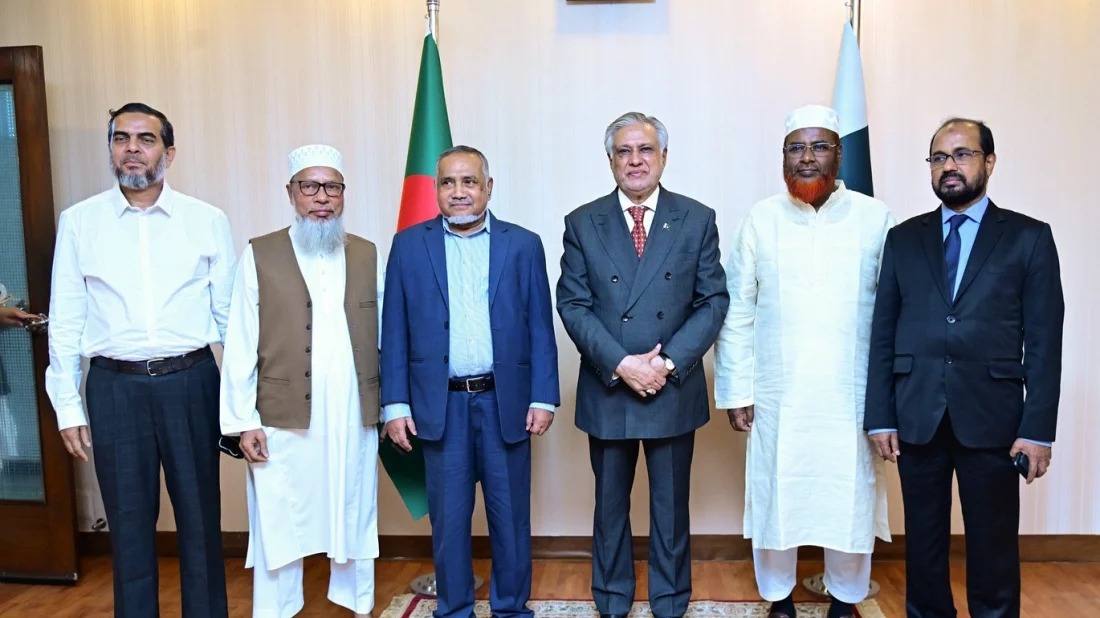
When Sheikh Hasina was removed from office in August 2024 after mismanaging two-month student uprising through violence, the political aftershocks were felt well beyond Dhaka. While an interim administration led by Nobel laureate Muhammad Yunus took charge shortly to stabilize and reset the country, but inside the shifting currents of Bangladeshi politics, there was another country saw opportunity, which was Pakistan. For Islamabad, the fall of Prime Minister Hasina, who was long perceived as closely aligned with India, appeared to offer a rare strategic opening. The interim arrangement which was crowded by sympathizers of Bangladesh Jamaat-e-Islami, created space for religious parties long marginalized under the Awami League’s rule. Pakistan moved quickly with intensified diplomatic exchanges, and even senior military leadership of two countries making reciprocal visits. But what increased with unusual frequency was Pakistani religious delegations travelling to different cities and towns of Bangladesh from Dhaka to Cox’s Bazar in south and Sylhet in east, among others. Behind the choreography appeared Islamabad’s clear calculation that if Bangladesh’s Islamist political sphere could be rejuvenated, Dhaka might be kept away from New Delhi and within the broader regional orbit of Islamabad. That bet seems to have failed now. In the recently concluded 13th general election, Bangladesh Nationalist Party (BNP) won a landslide two-thirds majority, winning 212 of the 299 seats on the ballot. Led by Tarique Rahman, son of former Prime Minister Khaleda Zia and former President Ziaur Rahman, BNP campaigned on the slogan of “Bangladesh First”, emphasising that it will not be beholden to any foreign capital. This political messaging seems to have resonated powerfully with the Bangladeshi electorate. Such a decisive vote has delivered a strong message to Pakistan, which seemed convinced that its favoured Islamist bloc will win the elections and give Islamabad a strong footing in Dhaka. Pakistan’s Bangladesh policy in the post-Hasina moment followed a familiar template. It has for decades viewed South Asia through the prism of strategic competition with India. Where New Delhi consolidates influence, Pakistan seeks counterweights as has been witnessed in Afghanistan where this logic has shaped policy for years. In Bangladesh, Islamabad appeared to hope for a softer replay. The Yunus-led interim government provided fertile ground for Pakistan to manoeuvre this policy. As Islamist networks that had faced political constraints under the Awami League suddenly found renewed visibility, Islamabad’s outreach extended beyond official channels into clerical and ideological spaces. For instance, Maulana Fazlur Rehman, head of Deobandi Islamist Jamiat Ulema-e-Islam (F), led a delegation of around two dozen prominent Pakistani religious leaders to Bangladesh ahead of parliamentary election in November 2025. They addressed large gatherings, organised under the banner of Khatm-e-Nabuwat conferences, across major cities and towns of the country, which were reportedly held in support of Islamist political actors preparing to contest the February 12 election. The symbolism of this religious affinity was hard to miss and, it seems, Islamabad believed that by encouraging the Islamization of Bangladesh’s political sphere, it could cultivate a government less beholden to India and more receptive to Pakistan. Yet this approach rested on two flawed assumptions. Firstly, it overestimated the electoral pull of Islamist forces in contemporary Bangladesh and secondly underestimating the depth of Bangladesh’s historical memory around 1971 war crimes committed by Pakistan Army in what was then East Pakistan. This memory and Islamabad’s reluctance to issue a formal apology over the war crimes remains central to Bangladesh’s national identity. It seems Pakistani policymakers willingly or otherwise seemed to calculate that five decades were enough to blunt that legacy and that religious affinity could transcend historical grievance. For many Bangladeshis, Pakistan is not simply another state but a former ruler whose actions precipitated immense trauma which remains unchanged across generations. If anything, it has been institutionalized through education, public commemorations and war crimes trials. And BNP’s campaign slogans captured this sentiment with clarity as it called for “Bangladesh First” against any outright alliance with any foreign power (Na Pindi, Na Dilli). Moreover, Pakistan’s attempt to leverage Islamization as a foreign policy tool also reveals a deeper tension. While Bangladesh is a Muslim-majority country, yet its political culture remains fundamentally based on Bengali linguistic nationalism. The Awami League’s secular framing was one expression of that synthesis. Even the BNP, while more accommodating of religious parties as was witnessed during its earlier rules, has not sought to subordinate national policy to clerical authority. While it is true that interim government’s closeness with Jamaat-e-Islami may have energized segments of Islamist base, but, as the results showed, it did not translate into a groundswell. Therefore, it is quite possible that Islamabad’s outreach through clerical visits, cross-border religious gatherings, symbolic solidarity may have reinforced suspicions that Islamist mobilization was being externally encouraged. For a country sensitive to sovereignty, such perceptions usually prove counterproductive. In fact, there is an irony here. While Pakistan’s own domestic experience illustrates the complexities of entangling religion and statecraft, yet in Bangladesh, it appeared willing to encourage precisely that dynamic in pursuit of geopolitical advantage. Nevertheless, the failure of Pakistan’s Bangladesh bid echoes its recent miscalculation in Afghanistan where Islamabad’s military-dominated establishment believed that it possessed decisive influence in Kabul after backing Afghan Taliban’s return to power in 2021. But relations with Afghanistan today are strained, marked by months long border closure and recurrent skirmishes along the contested Durand Line dividing the two countries. It can be argued that Pakistan overestimated the durability of ideological affinity as a substitute for structural partnership in both the cases. Neither has religious affinity guaranteed strategic alignment with Kabul nor has it now delivered political ascendancy in Dhaka as Bangladesh’s electorate has signalled that while religion remains integral to social life, it does not automatically translate into foreign policy alignment. For Pakistan, this presents a dilemma since Dhaka’s determination to pursue a “Bangladesh First” policy offers limited space for the kind of ideological leverage that Islamabad sought to cultivate. While Islamabad’s Bangladesh policy after 2024 was built on the hope that a moment of political flux could be
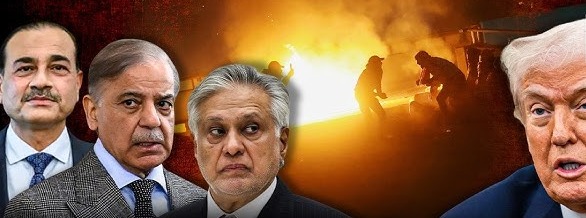
Pakistan’s claims of neutrality in the Middle East mask a deeper alignment with US strategic interests and regional power politics. Behind narratives of victimhood and sovereignty lies a pattern of dependency, propaganda, and calculated geopolitical positioning Pakistan often portrays itself as a nation caught in the crosshairs of regional rivalries, claiming that it could be the “next target” after Iran in the Middle East. Recently, Pakistan’s Defence Minister, Khawaja Asif, publicly warned of what he described as a coordinated regional design, alleging that India, Afghanistan, and Israel could align against Pakistan in the event of regime change in Tehran and framing the evolving situation as part of a broader hostile agenda encircling Pakistan and turning it into a vassal state. This narrative, however, is misleading and does not reflect the ground realities. In reality, Pakistan is firmly aligned with the United States and Israel. Its foreign policy has historically been shaped by its dependency on American support, often receiving substantial financial aid in return for participating in Washington’s regional objectives. Khawaja Asif himself acknowledged that Pakistan has consistently been used as a “toilet paper” by the US—a tool for executing policies in Afghanistan and beyond. Despite this, Pakistani leadership continues to portray itself as innocent, a victim of regional dynamics, and a target of potential aggression from its neighbors. Manufactured Victimhood and the “War on Terror” Narrative Pakistan’s narrative of victimhood also extends to its domestic and regional security challenges. When confronted over sponsoring terror against its neighbors, it frequently claims to have suffered enormous losses—more than 90,000 people—during the “War on Terror,” blaming the United States for its misfortunes. While the human cost is real, Pakistan’s government conveniently ignores its own agency in allowing extremist groups to operate and using them strategically against neighboring countries, from Kashmir to Kandahar. It even brainwashed and radicalized the whole Afghan population through madrasa and clerics’ networks; now most of them speak Urdu, which isn’t their mother tongue—such is the level of brainwashing. This narrative serves to absolve Pakistan of responsibility while portraying it as a passive player in global politics. Pakistan’s structural economic weaknesses exacerbate its reliance on external powers. Dollar inflows from the United States are critical for sustaining its economy. As Moeed Yusuf, Pakistan’s former National Security Adviser, openly acknowledged, “Pakistan does not have financial independence and… its foreign policy is still not free from US influence,” adding that “when you procure loans, your economic sovereignty is compromised,” which in turn shapes foreign policy choices. Similarly, Rabia Akhtar, Dean of Social Sciences at the University of Lahore, has argued that Pakistan’s economic trajectory has long been tied to leveraging its geostrategic importance to attract foreign assistance rather than building sustainable internal economic strength. As a result, Islamabad has a clear incentive to remain in Washington’s favour. Moreover, in periods without regional crises, Pakistan has historically manufactured or amplified situations—such as highlighting terrorist threats in Afghanistan, projecting the expansion of ISIS in the region, or emphasizing instability elsewhere—to draw US attention and aid. Maintaining relevance in American eyes is a central pillar of Pakistan’s foreign policy. Another driver of Pakistan’s regional behavior is its strategic rivalry with India. India’s growing partnership with the US in the Indo-Pacific frustrates Islamabad, prompting it to strengthen its ties with Washington to maintain parity in strategic attention. Pakistan’s obsession with “keeping up” with India often leads it to overplay its role in regional crises, creating narratives designed more for domestic and US audiences than for the truth. The Middle East Dynamics and Contradictions The ongoing Middle East conflict illustrates Pakistan’s duplicity. On the one hand, it assures Iran; on the other hand, it stands with the opposite camp. Pakistan recently signed a mutual defense pact with Saudi Arabia and reinforced these commitments, as its senior leaders, including Deputy Prime Minister and Foreign Minister Ishaq Dar, publicly warned that if Iran were to attack Saudi Arabia, Pakistan would stand by Riyadh under its defense obligations. Such statements make Islamabad’s claims of neutrality increasingly unconvincing. At the same time, narratives circulated by Pakistani sources claimed that Israeli and US fighter jets were approaching Pakistani airspace and warned that Pakistan would attack if they crossed it, projecting an image of vigilance and defiance. Yet parallel reports—including claims by elements within Islamic Revolutionary Guard Corps (IRGC) that Pakistan had facilitated US or Israeli operations—indicate complicity and affirmed the speculation that American forces may have been using Pakistani airspace in the broader confrontation with Iran. By amplifying warnings about potential Israeli aggression while downplaying its own strategic alignments, Pakistan appears intent on masking the extent of its cooperation with Washington and maintaining a veneer of independence for domestic and regional audiences. Moreover, timing is crucial in geopolitics, and Pakistan has frequently used diversionary tactics. For instance, recent escalations and attacks on Afghanistan appeared to be coordinated to distract Iran from Israeli and US attacks and to weaken the Taliban so that it could help Trump in acquiring Bagram Airbase in Afghanistan, signaling Islamabad’s collaboration with the broader objectives of Washington. Meanwhile, Pakistani media and social networks amplify propaganda, portraying Pakistan as neutral or even aligned with Iran, while its defense minister openly admits long-term subservience to US interests. Proxy Geopolitics and the Illusion of Neutrality Pakistan has consistently acted as a “bad boy” for the US in the region, from facilitating operations in Afghanistan to serving as a key partner during the “War on Terror,” creating regional instability. Its government, including Prime Minister Shehbaz Sharif, has even nominated President Donald Trump for the Nobel Peace Prize repeatedly and left no stone unturned to praise his global leadership, and one should not forget that Pakistan is an important member of the Board of Peace and will work under the US and Israel in the international stabilization force to disarm Hamas. This highlights Pakistan’s attempts to maintain visibility and favor with American political leadership. Such actions underscore Pakistan’s longstanding strategy: prioritizing US alignment, leveraging crises for attention and aid, and manufacturing narratives that obscure its role in regional instability. Pakistan’s claims of neutrality, victimhood, or potential targeting by
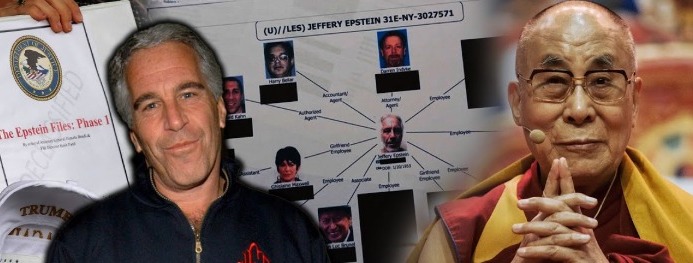
China has recently launched a new smear campaign against His Holiness the Dalai Lama. The Chinese media has highlighted that his name has been found in the Epstein files. The fact of the matter is that these files are available in the public domain, and there is no mention whatsoever of any meeting between the Dalai Lama and Epstein. China has been consistently running a misinformation campaign against the Dalai Lama, who is not only a great spiritual master but also the global face of Tibet’s struggle against Chinese occupation. One may recall that earlier, Chinese media had mischievously portrayed the Dalai Lama’s innocent act of affection towards children as an undesirable gesture. The release of the Epstein files has provided the Chinese propaganda machinery with another opportunity to build a narrative against the Dalai Lama. In response to the Chinese allegations, the office of His Holiness has provided a detailed explanation that should be sufficient for any rational person. The question is: what will China gain from this latest misinformation campaign? China wants to challenge the moral authority of the Dalai Lama, who is living in exile. His country, Tibet, if independent, would be the 10th-largest state in terms of geographical area in the world. As an exiled leader, the Dalai Lama has led by example throughout his life. He commands not just moral authority but also significant spiritual space. His followers include a large number of Westerners as well, and this has helped to create a strong constituency for Tibet’s freedom struggle. By running such smear campaigns, China wants to erode the moral authority of the Dalai Lama and question the legitimacy of Tibet’s freedom struggle. This is not new but a tried-and-tested pattern of the Chinese regime. During Mao’s era and the heyday of communism in the Global South, when China first attacked Tibet in 1950, it justified its aggression in the name of “peaceful liberation from feudalism”. Communist propaganda portrayed the Tibetan theocracy — led by the Dalai Lama and monastic elites — as an oppressive regime of “serfs and slaves” that needed to be overthrown to modernise the region. The result of this Machiavellian plan was a 17-point agreement, which China first imposed on Tibet. But China itself did not honour this agreement and attacked Tibet nine years later. In the aftermath of this attack, the Dalai Lama had to escape to India and, since then, he has remained there. Coming back to the Epstein files, the Epstein archive provides fertile terrain for such narrative opportunism. Epstein’s name is widely associated with moral transgression, secrecy and misconduct by elites. Even technically correct statements, such as pointing out that the Dalai Lama’s name appears in document listings, can be framed suggestively in this emotionally charged setting. It can be difficult for the general public to distinguish between “mention” and “connection”. This strategy is similar to more general trends seen in state and non-state disinformation campaigns, where facts are selectively emphasised to suggest narratives that are not supported by the evidence. Crucially, it seems that the messaging is appropriate for a variety of audiences. On a global scale, it coincides with a rise in mistrust of public leaders and elite institutions. Stories that suggest that “even moral icons are compromised” resonate with cynicism at a time when an increasing number of people have started distrusting moral authority. For such framing to work, it does not need to be widely accepted. It works by subtly undermining admiration and certainty. This latest episode of Chinese propaganda reinforces traditional depictions of the Dalai Lama in China. Historically, he has been described as a political separatist rather than a purely spiritual leader in Chinese public discourse. The purpose of stories that allude to moral contradiction is to reinforce this anti-Tibet narrative. Thus, information has been weaponised and facts have been manipulated to serve the ideological agenda of the Chinese Communist Party (CCP). The Chinese campaign should also be viewed against the backdrop of geopolitical sensitivities surrounding the succession of the Dalai Lama, who will turn 91 this year. Beijing has stated unequivocally that it intends to take the lead in identifying any reincarnations of the Dalai Lama in the future. On the other hand, the Dalai Lama has proposed alternative systems that might circumvent Chinese government regulation. Even a slight deterioration of moral authority gains strategic significance in such a high-stakes battle. Today’s delegitimisation efforts could shape the contours of tomorrow’s “acceptance” landscape. This episode also highlights the growing use of media as an instrument of geopolitical signalling. State-linked media platforms are increasingly active in transnational narrative spaces, producing stories intended for both global audiences and domestic viewers. The goal is seldom limited to persuasion. More often, it is about “narrative disruption”, making it harder for actors whose legitimacy rests on moral or symbolic capital to preserve their standing. Ultimately, this episode is better understood as an illustration of strategic narrative behaviour rather than a disclosure about the Dalai Lama himself. In a fragmented media environment — where attention, ambiguity and perception often matter more than hard evidence — it shows how authoritarian states run disinformation and misinformation campaigns to target even those who are victims of their brutal aggression. The underlying politics here is less about documentary facts and more about image, legitimacy and enduring geopolitical tensions.
The digital realm was initially envisaged as a great equalizer of knowledge, breaking down barriers of geography, class, and institutional gatekeeping to make huge repositories of information freely accessible to anyone with an internet connection, to empower individuals across the world, to learn, to innovate, and to challenge pre-established narratives on an unprecedented scale. However, what the digital realm has now been turned into is the paramount battlefield of the 21st century, wherein states vie for territory, not just through conventional arms, but dominance over perceptions, narratives, and decision-making. This marks the rise of cognitive warfare, or the strategy that weaponizes information to shape minds, erode trust, and achieve strategic objectives, without even firing a shot. China has pioneered the approach, as part of its ‘unrestricted warfare’ doctrine, integrating propaganda, disinformation, cyber operations, and psychological manipulation to influence the cognitive environments of its adversaries. People’s Republic of China’s (PRC’s) People’s Liberation Army (PLA) explicitly sees the human brain as the new domain of conflict, aspiring for cognitive dominance, through coordinated campaigns that exploit social media, AI-generated content, and state-affiliated networks. A stark example of this tactic was recently witnessed early this year, following the U.S. Department of Justice’s release of additional Jeffrey Epstein files. Chinese state-controlled media and affiliated outlets amplify claims that the Dalai Lama was deeply implicated, highlighting mentions of his name over 150 times, often citing emails where Epstein speculated about meetings or events. China Global Television Network, for example, published an article titled, “Dalai Lama’s name appeared at least 169 times in Epstein files. The Office of His Holiness, the Dalai Lama, unequivocally stated that no meeting ever occurred, and no interactions were authorized, and the references were aspirational at best, with no evidence of any connection or wrongdoing. The timing of PRC outlets and narratives on social media is worth noting and emerged immediately after the Dalai Lama’s Grammy Award win. The objective was to tarnish his global moral authority and to undermine Tibetan cultural identity. The tactic is not new. In 2023, as well, China’s “Pedophile” Smear Campaign tried to tarnish the image of His Holiness. In 2023 again, Global Times tried portraying pre-1959 Tibet as a feudal, slave society under the Dalai Lama’s theocratic rule, accusing him of being a slave owner. In 2021 as well, the Global Times’ white paper reprint, titled “Tibet Since 1951: Liberation, Development and Prosperity, tried showcasing Tibet as ruled by a theocratic, feudal serfdom, that “crushed human dignity, ignored human rights, and impeded development”. These oft-repeated episodes exemplify how Beijing exploits the digital realm to sow doubt, leveraging platforms, to spread narratives to attempt to portray the Dalai Lama as morally compromised, aligning with China’s long-standing efforts to delegitimize him as a “separatist”. China’s cognitive warfare against the Dalai Lama is neither isolated nor new. For decades, as seen in the given examples, Beijing has targeted Tibetan exile networks, through cyber-attacks, such as the 2009 GhostNet operation that infiltrated the Dalai Lama’s offices, to ongoing smear campaigns to portray him as a threat to stability. The attempt is to erase Tibetan autonomy in global perceptions, and to manufacture consent for assimilationist policies in Tibet. The tactic now is to flood digital spaces with false scandals, and to diminish his influence among Tibetans and supporters in India and elsewhere. India also has repeatedly found itself on the receiving end of similar cognitive warfare from China, which gets heightened during recurring border conflicts initiated by China. Just one example out of myriads is from 2020, when, during the Galwan Valley clash, Chinese state-owned media downplayed PLA casualties, and blamed India for provocation, while amplifying calls for boycotts of Indian goods. Beijing has also issued provocative and incorrect geographical maps, come up with names for locations in Arunachal Pradesh, and combined legal warfare with disinformation to try to normalise territorial claims. Cyber intrusions have targeted Indian power grids in Ladakh, Mumbai, and Telangana, and tried to exfiltrate data from India’s ministries, while Chinese-linked networks spread disinformation on social media to exploit domestic fissures. Diaspora communities have also been targeted to sow discord. Taiwan stands as perhaps the most intensively targeted recipient of China’s cognitive warfare laboratory. Bots, fake accounts, and pro-unification propaganda are difficult to miss in Taiwan, and tactics also include spreading rumours about candidates contesting elections and portraying unification as inevitable and beneficial for Taiwan. The ways in which China targets candidates contesting elections in Taiwan are similar to its smear campaigns against the Dalai Lama; while the ways in which China tries to dampen military morale in Taiwan are similar to its objectives vis-à-vis India. What China also attempts in democracies is to co-opt media, to self-censor on topics that China considers sensitive- such as Tibet or the Dalai Lama, and this illustrates how cognitive operations interact with hybrid coercion. Other countries, such as Australia, also face parallel threats. Chinese-linked networks have tried to interfere in referendums and elections. In 2025, for example, Beijing appeared to support Labor’s re-election through subtle online campaigns on platforms popular among Chinese Australians, such as WeChat and RedNote (Xiaohongshu); and these included resurfacing old misleading narratives about politicians’ stances on China-related issues, potentially enhanced by generative AI for translated videos or fabricated endorsements. The Philippines and Vietnam also encounter maritime dispute focussed disinformation, and all these examples reveal a pattern that China deploys in its cognitive warfare- to weaken the cohesion of adversaries, to isolate them diplomatically, and to prepare the ground for coercion or conflict. Ignoring the digital battleground risks ceding strategic advantage in an era where victory is based on the control of cognition, and not just on the conquest of land. As the attempt to link the Dalai Lama to Epstein shows, Beijing’s operations are highly adaptive, opportunistic, and relentless. Communities and countries at the receiving end of China’s cognitive warfare have to prepare their defences in advance, while unifying countermeasures to safeguard open societies.
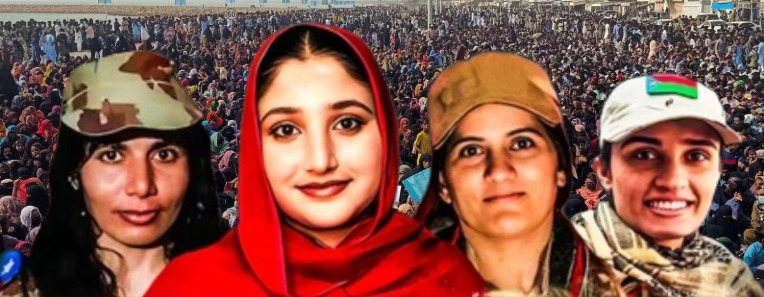
The Balochistan Liberation Army (BLA) launched what analysts describe as its most expansive operation in decades on January 30, with its fighters attacking military and government installations at nearly 48 locations across 14 cities, including the provincial capital, Quetta. For almost a week, the Pakistan Army struggled to regain control, even as it declared its “clearance operations” had concluded on February 5, while local media reports stated that BLA fighters continued to maintain control over several arterial roads. While the scale and intensity of the attack red-faced Pakistan’s intelligence and security grid, the most consequential shift was not tactical but social, with women visible on the front lines, carrying rifles, addressing cameras and, in several cases, conducting suicide attacks. Their presence signals a transformation of the Baloch insurgency from a predominantly male guerrilla movement into a broader societal revolt. The BLA has identified three of the four suicide attackers as women. They include 24-year-old Asifa Mengal, who struck the Counter Terrorism Department (which functions as ISI’s field offices) headquarters in Noshki; 21-year-old Hawa Baloch alias Dorshum, who targeted security forces in Gwadar; and 60-year-old Hatam Naz Sumalani alias Gul Bibi. In video footage released by the group’s media wing, Hakkal, Ghazi Dur Jan Baloch, described as a commando of its Fateh Squad, is shown speaking calmly from a battlefield before being extracted after three days of fighting on the frontline. In another widely circulating video clip, 29-year-old Yasma Baloch alias Zarina is seen sitting beside her husband, a combatant in Pasni, shortly before both were killed, as per another media release by the group. While Baloch women have participated in nationalist politics before, it was never so openly in insurgency combat roles, even though a few suicide attacks have been carried out by women in recent years. For many observers, this marks the “mainstreaming” of the insurgency, evidencing that the conflict has penetrated the intimate core of Baloch society, where mothers, daughters and grandmothers are no longer only mourners of the disappeared but are becoming fighters themselves. It is true that armed movements across the world have often relied on women, from the Tamil Tigers in Sri Lanka to Kurdish militias in Syria. Scholars have noted that when women cross the threshold from support roles to direct violence, it usually indicates two things. Firstly, it shows the widening base of legitimacy of armed insurgency for a political cause and, secondly, and more importantly, it highlights the closure of non-violent avenues to voice grievances. In the case of Balochistan, both of these conditions are present. Pakistan’s decades of militarised governance in the region have eroded traditional spaces of dissent, with much of its popular leadership humiliated by the country’s elite class, as was done with Akhter Mengal in 2024. The province, which was annexed by Pakistan in 1948 after a brief period of contested independence, has experienced repeated waves of insurgency in the 1950s, 1960s and 1970s, and again since the early 2000s, with the Pakistani state using heavy-handed counterinsurgency. Moreover, even as political institutions exist in Balochistan, they function largely as extensions of the security establishment, with the Quetta cantonment commander seen as more powerful than the elected chief minister of the province. Balochistan is Pakistan’s largest province, yet its poorest. It sits atop vast reserves of gas, copper and gold, but local communities see little benefit, as most of these resources are used by the Punjab-centric politico-military elite to fuel the development of Punjab and Punjabis. Pakistan has further allowed China to undertake mega resource-extraction projects under the China-Pakistan Economic Corridor (CPEC), thereby deepening resentment and bringing further militarisation without any dividend for locals. Pakistan’s government has also auctioned provincial resources to US President Donald Trump to seek military incentives as it hedges between Washington and Beijing. While the state narrative frames the insurgency as the work of a few extremists, the ground reality presents a far more complicated picture. The current wave of rebellion, which is the longest phase of the Baloch insurgency, began in the early 2000s after the killing of nationalist leader Nawab Akbar Bugti by the Pakistan Army. Since then, groups such as the BLA have steadily expanded recruitment, drawing not only from tribal fighters but also from urban youth and educated professionals, thereby helping it sustain and grow despite multiple campaigns by the Pakistan Army. The latest attack by the BLA, described as Operation Hurof 2, reflects this evolution. In its earlier iteration, BLA fighters demonstrated sophisticated coordination by hijacking a train carrying off-duty soldiers in the remote Bolan region last year, an operation that lasted more than two days, during which the Pakistan Army suffered dozens of casualties. The January 30 attack went further and revealed an organisation capable of simultaneous urban warfare across half the province. Women’s participation fits this trajectory, with their entry into the battlefield carrying more than symbolic weight. In conservative Baloch culture, where women are often viewed as custodians of honour and continuity, their willingness to leave their homes to take up arms, and their readiness to kill and die, communicates that the conflict has moved beyond factional militancy into a collective grievance. Families that once discouraged sons from joining now watch daughters volunteer. For Islamabad, this signifies that the very social contract of Pakistan has collapsed in Balochistan. A state usually claims moral agency to present itself as the protector of its people, but in Balochistan that bond appears to have long frayed. Here, leaders are widely viewed as appointees of the security apparatus, and elections as an engineered spectacle. The closure of civic space for voicing grievances in the region is central to understanding why women now pick up guns. When the Baloch Yakjehti Committee (BYC) organised long marches seeking accountability for the Pakistan Army’s conduct and the whereabouts of over 8,000 forcibly disappeared people in the province, it was banned, with many of its prominent leaders, including Dr Mahrang Baloch, imprisoned. Therefore, the mothers and daughters who once sat outside press clubs holding photographs of their

India-Bangladesh relationship has witnessed historic low since the 2024 July Uprising, a downward trend that is still continuing. With an uprising that forced Sheikh Hasina to flee Bangladesh, New Delhi woke up to a surprising wave of anti-India sentiments in its neighbourhood. The resurgence of Islamists and attacks on minorities, in addition to the country’s social and cultural spaces, confirmed the main force behind such sentiments. The interim government under Muhammad Yunus took little time to gear Bangladesh’s geopolitical shift away from India and towards Pakistan in name of ‘recalibration’. There was no doubt that the Islamists forces penetrated the present interim administration, prolonging the diplomatic lows between the two countries. For every domestic unrest engulfing Bangladesh, the interim government blamed India for ‘harbouring anti-state activities.’ New Delhi’s concerns regarding the increasing atrocities on minorities have been repeatedly dismissed as ‘Indian propaganda’, despite international and Bangladesh’s rights organisations reiterating the same. The prolonged winter in bilateral relations hit its lowest in December when Inqilab Mancha (an anti-India Islamist-led youth platform) leader Osman Hadi was assassinated, leading to a quick blame game. without any evidence. The month witnessed Islamist extremists attacking Bangladesh’s significant cultural centers, as well as two of the most prominent media outlets, alleging them to be ‘pro India’. The radical mob also organised protest marches outside Indian High Commission in Dhaka and assistant commissions in Rajshahi, Khulna, Sylhet and Chattogram, with the intention of launching similar violent attacks. Indian commissions’ security in Bangladesh, is compromised, which explains its recent decision to recall family members and dependents of Indian diplomats from the country as a precautionary measure, days before the 13th national election. The Islamist extremist’s onslaught on media freedom and cultural platform coincided with another horrifying incident — the lynching of a Hindu garment worker Dipu Das, a lynching justified for Das’s alleged ‘blasphemous’ remarks and cheered and celebrated by onlookers as his naked corpse hung from a tree was burnt in public. Perhaps this was a signaling to New Delhi, of Bangladesh’s own fate of minority Hindus shielded behind the curtain of ‘non-communal’ framing. This incident prompted India summoning Bangladesh envoy, and for Bangladesh’s tit-for-tat summons. A nasty political atmosphere brewing anti-India hatred also led India to temporarily suspend its visa operations at Visa Application Centers in Bangladesh, a move also reciprocated by Bangladesh with respect to its missions in India. Amidst this, New Delhi displayed its goodwill gesture and calibrated diplomatic protocol when India’s External Affairs Minister visited Dhaka to attend the funeral of Bangladesh Nationalist Party (BNP) chief Begum Khaleda Zia. Many in Bangladesh perceived this as a positive and stabilising reset of bilateral relations, a forward-looking direction before Bangladesh is to face the 13th national election in February. Then came the cricket fiasco early January. The Board of Control of Cricket in India (BCCI)’s direction to Indian Premier League (IPL) team Kolkata Knight Riders (KKR) to release (the only) Bangladeshi pacer Mustafizur Rahman (auctioned for $1 million) from its 2026 squad, believed to be in line with recent developments in Bangladesh (no official reason cited) did not bode well with Bangladesh, that reciprocated with the decision to not broadcast IPL matches. Just a day after BCCI’s direction to release Rahman,Bangladesh abruptly raised ‘security concerns’ for its players to play in India and asked the International Cricket Council (ICC) to relocate its T20 World Cup matches to a ‘neutral’ venue such as Sri Lanka. However, after repeated assessments, the ICC rejected such a request, citing lack of any credible security threats for Bangladeshi players, officials or fans and noted that such a sudden change would compromise ICC’s integrity. Following weeks of discussion, ICC gave Bangladesh a 24-hour time on January 23 to communicate its final decision. It should be noted that of all board members present in this, Pakistan Cricket Board (PCB) was the only full-time member that expressed support for Bangladesh’s decision. In a formal letter sent before the ICC board meeting, Pakistan even assured Bangladesh to host its matches in Pakistan. PCB also threatened to boycott the T20 World Cup in apparent solidarity with Bangladesh to protest ICC’s refusal for venue shift request. However, Pakistan Cricket Board (PCB) chief announced its final decision to be conveyed by January 30 or February 2. Meanwhile, Bangladesh gave no response within the 24 hours stipulated time, indicating its decision to not participate in the T20 World Cup, leaving way for Scotland to officially replace the country on January 24. This brings into question: why Bangladesh, despite assurances of no security threat by ICC, refused to change its decision? One obvious development in this fiasco points towards Pakistan — the only one to back Bangladesh. It is believed that Pakistan’s influence has led to BCB taking such a hardline stance. PCB argued for its own agreement with BCCI last year to play ICC matches at a neutral venue until 2027. However, one cannot draw parallels as India has not shown any signs of animosity towards neighbouring Bangladesh, although the same cannot be said for the latter. Neither has Dhaka raised security concerns with the ICC before BCCI’s decision to withdraw the only Bangladeshi player from playing in the IPL, leaving little doubt that ‘security concerns’ are mere reciprocal actions. While one can debate on whether this was the right move on New Delhi’s part, the fact remains that India’s soil does not pose a security threat for Bangladesh. Rather, India has been a consistent support and played a pivotal role in building Bangladesh cricket. BCCI’s role, especially in the 1990s, in hosting Bangladesh, providing training and infrastructural support to Bangladesh cricket via regular matches paved the way for its exposure and global recognition in the ICC. BCCI aided Bangladesh’s entry into the ODI World Cup in 1999, leveraging the Asian bloc in cricket. Former BCCI chief Jagmohan Dalmiya’s tenure as ICC President had also been instrumental behind Bangladesh being granted a full-time membership and Test status in June 2000, overcoming skepticism of Australia and South Africa
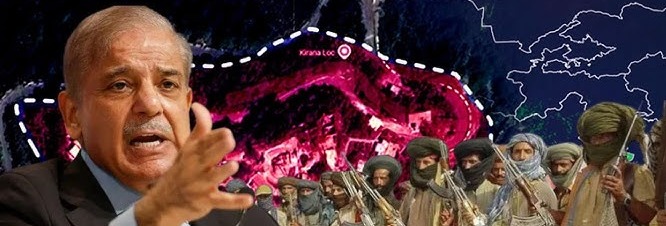
It is barely a month into 2026 and Pakistan, it appears, is already sliding toward a grim year ahead. In just the first month, there have been nearly a hundred security forces casualties, including a lieutenant colonel targeted while traveling in a private vehicle on January 28, besides dozens of civilians. If this trend holds which look highly likely given increasing strength of ethnonationalist insurgency in Balochistan and Islamist militancy in Khyber Pakhtunkhwa, it could turn into the deadliest years for Pakistan Army led security forces in the country. On Jan.31, Balochistan Liberation Army (BLA) launched coordinated assaults across as many as fourteen cities in Balochistan. Labelled as Operation Herof 2.0, hundreds of BLA fighters struck military and provincial government installations from provincial capital Quetta to port city Gwadar, from Turbat to Panjgur, demonstrating a level of planning and reach that Pakistan’s security planners have long insisted was impossible. While the BLA claimed 84 security officials killed and 18 taken hostage, Pakistan Army’s DG-ISPR acknowledged the death of 17 soldiers and 31 civilians while claiming to have killed 177 BLA fighters. It has been over four days and it appear BLA seems to have entrenched its control over many areas across the cities, particularly Noshki, with Pakistan Army struggling to remove the fighters despite using indiscriminate force, including aerial attacks. The contestation over the casualties on either side aside, this latest attack demonstrates how the insurgency in Balochistan has evolved from a peripheral “irritant” into a strategic challenge capable of overrunning state facilities and humiliating Asim Munir led Pakistan Army in real time. But this was not an isolated outburst as independent monitors have recorded as many as 87 separate insurgency incidents in January alone. According to the Pakistan Institute of Conflict and Security Studies (PICSS), since General Asim Munir assumed command in November 2022, the army and its affiliated forces have lost 2,017 personnel, with a record 857 deaths in 2025, besides over 1100 civilian fatalities during the same period. These figures rival the darkest years of Pakistan’s counterinsurgency campaigns, yet they receive only fleeting acknowledgement in national discourse. But what distinguishes the military casualties is not merely their number but more importantly who is dying. According to the media reports about insurgent incidents in Balochistan and militant incidents in KP, the bulk of losses are borne by the Frontier Corps (FC) and the Levies, which are paramilitary formations recruited largely from Baloch, Pashtun, Sindhi and other non-Punjabi communities. It is these units that patrol the most dangerous terrain, man remote checkpoints and therefore become the first line of responders when insurgents and militants strike. On the other hand, the Punjabi soldiers, which dominate the officer corps and the central command structure, are far more insulated from direct combat. Such a division of risk is not accidental but reflects the very psychology of the Pakistani state. The military remains overwhelmingly Punjabi as demonstrated by its ethnic demographics which has 70 to 75 percent Punjabis, 14–20 percent Pashtun, 5–6 per cent Sindhi, and merely 3–4 Baloch. The officer class is even more skewed in favour of Punjab with Punjabi officers commanding Frontier Corps and Levies. While Baloch soldiers are ordered to fight Baloch insurgents and Pashtun recruits are sent to battle Pashtun militants, the arrangement guarantees local resentment. Under General Munir, this Punjabi dominated military establishment has acquired a political purpose of consolidating every lever of power of the state. Since his elevation in 2022, Pakistan has gradually transformed into military led hybrid rule through a carefully calibrated yet brazen constitutional gerrymandering which has rendered elected institutions largely irrelevant with real authority in the General Headquarters in Rawalpindi. As such, the Punjabi dominance within the army becomes the pillar of regime stability, while non-Punjabi paramilitaries serve as expendable shock absorbers for an unpopular security project. For decades, Pakistan’s military has portrayed itself as the sole glue holding a fractious nation together. But that has changed in the recent decades where military has transformed into a catalyst of insecurity by designing Islamabad’s imperial approach towards non-Punjabi provinces which sustains on coercion than consent. Nowhere is this more evident than in Balochistan. For decades the province has been treated through a colonial lens of resource extraction of gas and other mineral copper with little investment in its people. While political dissent is answered with enforced disappearances and economic demands are framed as treason, such policies have further alienated people and contributing to the cause of ethnonationalist groups. The BLA’s latest offensive not only demonstrated scale and intensity but also its social breadth with men and women fighting side by side, reportedly including a grandmother and a newly-wed couple. But for Pakistan, it is the state’s policies which have ensured that the cause of Baloch nationalist groups was no longer a fringe phenomenon but entrenched within the society. Likewise, Khyber Pakhtunkhwa tells a parallel story. Here, Pakistan’s proxy policy of terrorism as instruments of regional policy, particularly against Afghanistan and India, has unravelled as many of those groups, including many factions within Tehreek-e-Taliban Pakistan (TTP) have now turned inward. And despite repeated anti-militancy campaigns by the army, militant networks have reconstituted themselves with each case of military violence and emerging stronger. General Munir’s response has been to double down by expanding military courts, criminalising online dissent, and relying ever more on auxiliaries like the Frontier Corps and Levies. This strategy is less about defeating insurgency than managing it at tolerable cost which is however paid overwhelmingly by non-Punjabi bodies. On the other hand, Punjabi soldiers remain guardians of regime stability in Islamabad and Lahore. The contrast is visible: armoured calm in the centre, burning peripheries at the edges. History suggests that armies can survive defeats but what they cannot survive is a perception of injustice within their own ranks. Asim Munir led Punjabi military establishment of Pakistan Army continues outsourcing its dirtiest wars to non-Punjabi formations while reserving privilege for the Punjabi core. It is a recipe of sowing fractures that may one day reach Rawalpindi itself.
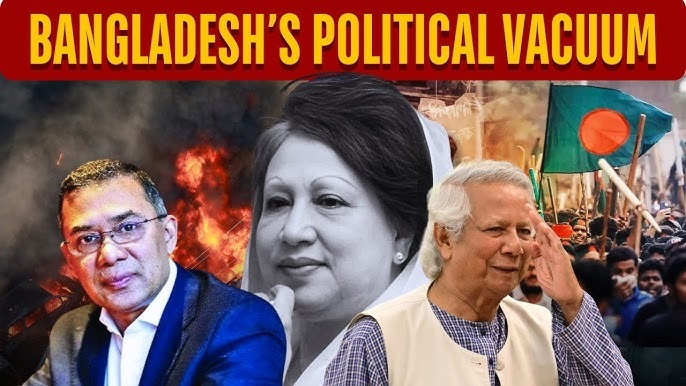
-Arun Anand On 12 February Bangladesh is to participate in its 13th national election. In the country’s history, this election stands as unique for many reasons—a) the first election held after July Uprising that deposed Sheikh Hasina’s rule on 5 August 2024, b) In a first, this national election is not seeing participation of the country’s largest party Awami League due to the ban on its party activities, c) It is also the first time that former political allies—Bangladesh Nationalist Party (BNP) and Jamaat-e-Islami (JeI) are contesting as opponents, d) the 11-party alliance led by Jamaat-e-Islami puts Islamist parties at the forefront of the electoral game, a huge boost to country’s Islamist politics. The election campaign for 13th national election launched on 22 January, with BNP yielding the highest number of candidates (288) and Jamaat the second (224) to compete in the country’s 300 constituencies. The resurgence of Islamists in Bangladesh owes much to the political vacuum left by Awami League after the July Uprising. The interim government aided Jamaat-e-Islami’s comeback in mainstream politics by lifting the ban, later enabling its restoration of party registration, allowing its re-entry in the electoral game after 2013. Moreover, the interim period witnessed many Islamists convicted for 1971 war crimes or terror activities after being acquitted of all charges, allowing their arrival in the political scenario once again. One of them is ATM Azharul Islam, now contesting from Rangpur-2 constituency as Jamaat candidate. Nevertheless, Jamaat-e-Islami attempted to rebrand itself as a progressive, moderate party that seeks to create an “Islamic welfare” state. The comeback of Islamist political parties in post-Hasina Bangladesh alongside witnessed the revival of Islamist extremism, making their loud presence in the country’s socio-cultural life. The steep rise in violence against religious and ethnic minority communities, rise in sexual violence, and mob attacks in cultural festivals should be seen as a byproduct of Islamists resurgence. Notwithstanding the fact that Islamists political parties occasionally displayed dissatisfaction over these developments and claims its distance from radicals, one cannot ignore that the Islamists—be it political parties or extremist factions—share the same ideological goals—to create an Islamic state in Bangladesh which would be based on Sharia-based law. These forces are essentially against the country’s state principles (one being secularism) enshrined in the 1972 Constitution and want to replace the present constitution with a new one which would follow Islamic principles instead of what they claim as ‘man-made laws.’ Undoubtedly, if these parties come to power, one would likely see a convergence of their goals being translated into violent actions. Bangladesh’s own history 1990s-mid 2000s testifies to this. In the mid 2025 the Islamist coalition started taking shape when five Quami- Madrasa-based registered Islamist parties—Bangladesh Khelafat Majlish, Jamiat-e-Ulema-e-Islam, Nezam-e-Islam Party, Khelafat Majlish and Islami Andolan—expressed interest on an electoral compromise by filing a single candidate in the national election. At this stage, Jamaat attempted to forge a unity with this alliance, but it was kept out because of unity’s initial hesitation with Jamaat with respect to ideological differences as well as its controversial past. However, in September 2025 protest called by Islami Andolan, Khelafat Majlis and Jamaat-e-Islami, alignied on five key demands which includes July Charter referendum and trial of July atrocities and introducing proportional representation in both houses. This protest was referred as ‘moving closer to forming an alliance’. The alliance then expanded to eight ‘like-minded’ parties, this time including Jamaat-e-Islami and compromising of Islami Andolan Bangladesh, Bangladesh Khelafat Majlis, Khelafat Majlis, Nezame Islam Party, Bangladesh Khelafat Andolon, Bangladesh Development Party, and Jatiya Ganatantrik Party (JAGPA), declaring to contest 2026 election through a seat-sharing arrangement. Following the official Jamaat-led coalition, Jamaat-e-Islami, resorted to aggressive historical revisionism in their speeches on the occasion on Intellectuals Martyrs Day, calling ‘India’s conspiracy’ behind the murder of intellectuals and blaming ‘Delhi loyalists’ shaping the present narrative on Liberation War. Jamaat leaders also remarked on all government institutions to be governed only by ‘Allah’s law’, promising that if they come to power, no other man-made laws would be able to operate in the country. Indeed, the rebranding as a tolerant, moderate party was just an electoral gimmick to enter this coalition. In December, Islamist-led alliance further expanded when National Citizen’s Party, Liberal Democratic Party and Amar Bangladesh and joined to form an 11-patry alliance. These parties earlier that month formed a separate alliance known as Democratic Reform Alliance, posing itself as an alternative to ‘old-style politics’ of Jamaat and the BNP. The change in decision was justified by NCP as ‘changed political landscape’ and not an ‘ideological alliance’. Nevertheless, NCP’s joining of Jamaat-led alliance proved heavy for the apparent ‘revolutionary’ party, as nearly 30 members of NCP, issued a joint letter to the party convenor, opposing this move, questioning the party’s ‘democratic ethics.’ About 16 NCP members, including 13 central leaders of the party (and 16 in total), resigned from NCP, despite efforts at reconciling. The student-led political party is now openly admitting that its sole aim is to win the upcoming election, a tight slap to those who joined the party thinking of forming ‘New Bangladesh’. The alliance’s seat-sharing was announced at a press briefing on 16 January. Jamaat announced allocations for 253 constituencies, with Jamaat contesting for 179 seats, NCP 30, Mamunul Haque-led Bangladesh Khelafat Majlish 20, Khelafat Majlish 10, Liberal Democratic Party seven, AB Party three, and Nizame Islami Party and Bangladesh Development Party two seats each. Islami Andolan, believed to have been allocated 47 seats, however, boycotted the briefing. Amidst this, Islami Andolan’s party spokesperson claimed that Jamaat is taking all decisions unilaterally and authoritatively, leading to mistrust and divisions within the alliance. Soon after, Islami Andolan officially left led Jamaat-led 11-party alliance and stated to file independently in 268 constituencies, and expressed to support candidates aligning with its party ideals for the remaining 32 constituencies. The party also extended its support for Khelafat Majlis’s chief Mamunul Haque, announcing withdrawal of two seats where Haque is contesting, ‘out of respect and his contributions to Islamic politics’. After leaving the alliance, Islami Andolan chief accused Jamaat of ‘using religion (Islam) to pursue conspiratorial political goals’ and even criticised its secret dealings with Washington. The same accusation has also been raised by Jamaat’s main contender Bangladesh Nationalist Party. The secret dealing refereed here is the recent Washington
Pakistan is a state whose economy is fragile and dependent on International Monetary Fund (IMF) funds. It survives on repeated bailouts, emergency loans, and financial lifelines from friendly nations. Saudi Arabia has stepped in more than once to keep Islamabad afloat. China has long been presented as Pakistan’s “all weather friend” and economic backbone, though many now describe that relationship less as partnership and more as a debt trap. Yet in spite of all this dependency, Pakistan wants the world to believe a different story. It wants to appear economically strong, militarily confident, and financially independent. What Pakistan is doing today is not economic reform. It is rhetoric. It is showing the outside world that it is signing defence deals, selling aircraft, and exporting weapons, trying to prove that its economy is steady and its future secure. But this is an image, not a reality. The strength being displayed is performative. The weakness is simply hidden behind uniforms, fighter jets, and loud announcements. Pakistan is not fixing its economy. It is disguising its vulnerability with military symbolism. The louder Pakistan speaks about defence exports, the quieter it becomes about its real economy. Inflation, unemployment, energy shortages, and debt dominate the lives of ordinary people, yet these issues vanish from official speeches. Instead, fighter jets and arms deals take centre stage. When Pakistani leaders claim that arms exports could replace IMF assistance, it sounds inspiring. But inspiration does not pay debts. A few billion dollars in defence contracts cannot rescue an economy that bleeds far more every year through mismanagement and corruption.These statements are not financial strategies. They are emotional distractions. For a struggling population, this messaging is powerful. It tells them: we are not weak, we are respected, the world is buying from us. It is national pride used as economic anesthesia. The pain is real, but the narrative numbs it. The arms industry becomes a showcase, not because it is saving Pakistan, but because it is one of the few areas where Pakistan can still claim competence. And so, it is inflated, glorified, and sold as proof of national revival. The JF-17 fighter jet has become the symbol of Pakistan’s supposed rise. It is constantly described as “combat-proven” and “battle-tested,” especially in relation to India. But the aircraft itself is not extraordinary. It is affordable, basic, and politically convenient. Its value lies in accessibility, not superiority. Yet Pakistan markets it as if it were a technological triumph. Conflict is used as certification. War is turned into advertising. The message is simple: we fight, therefore we are strong. This logic is dangerous and dishonest. It transforms instability into pride and tension into marketing. It ignores the aircraft’s limitations, past safety concerns, and modest capabilities. But in Pakistan’s narrative, facts matter less than perception. The jet is no longer just a machine. It is a storytelling tool. It allows Pakistan to say: We are not just borrowers. We are sellers. We are not desperate. We are capable. The tragedy is that this confidence exists mostly in speeches. Look at where Pakistan is selling its weapons. Libya. Sudan. Regions torn apart by civil war and instability. These are not healthy markets. They are survival markets. Pakistan is not exporting to strong economies. It is exporting to broken states. This reveals the real nature of its defence trade. It is not a mark of global trust. It is a sign of opportunism in chaos. Pakistan is positioning itself as a supplier to conflict, not stability. And then there is Bangladesh. Any military cooperation here is less about commerce and more about politics. It is aimed directly at India. It is meant to disturb regional equations and reopen old wounds. Even a small deal carries massive symbolic weight. Against India, Pakistan’s defence exports become a narrative weapon. Not a military one, but a psychological one. They are meant to say: we still matter, we still challenge, we still shape the region. The problem is that symbolism is replacing substance. In Pakistan, only one institution truly thrives: the army. It is the strongest, richest, and most powerful organization in the country. Defence exports do not uplift the people. They strengthen the military’s grip on the economy and politics. Factories, real estate, business empires, and now arms exports all sit within the military’s shadow. The army prospers while civilians struggle. Soldiers are celebrated while workers search for bread. Jets are showcased while hospitals crumble. This is not national development. It is institutional enrichment. Pakistan’s arms-export story is less about economic independence and more about military dominance over national narrative. The country’s future is being narrated through the language of weapons, not welfare. Pakistan wants to look powerful. It wants to be feared, respected, and acknowledged. But power without stability is just performance. Selling weapons while begging for loans is contradiction dressed as confidence. The IMF keeps Pakistan alive. Saudi Arabia keeps it solvent. China keeps it afloat. And the army keeps it loud. This is not sovereignty. It is dependency with better branding. The world is not witnessing Pakistan’s economic breakthrough. It is witnessing Pakistan’s rhetorical survival strategy. When reform is too difficult, image becomes the alternative. When prosperity is unreachable, pride becomes the substitute. Pakistan is not exporting recovery. It is exporting reassurance. Pakistan has always shown the world that it is strong, disciplined, and unbreakable. But behind that image, its people struggle with poverty, inflation, and hopelessness. The economy remains wounded and dependent, while only the army grows richer and more powerful. Fighter jets rise into the sky, but ordinary Pakistanis remain grounded in hardship. The nation looks powerful from the outside, but inside, its strength is uneven, fragile, and painfully selective.
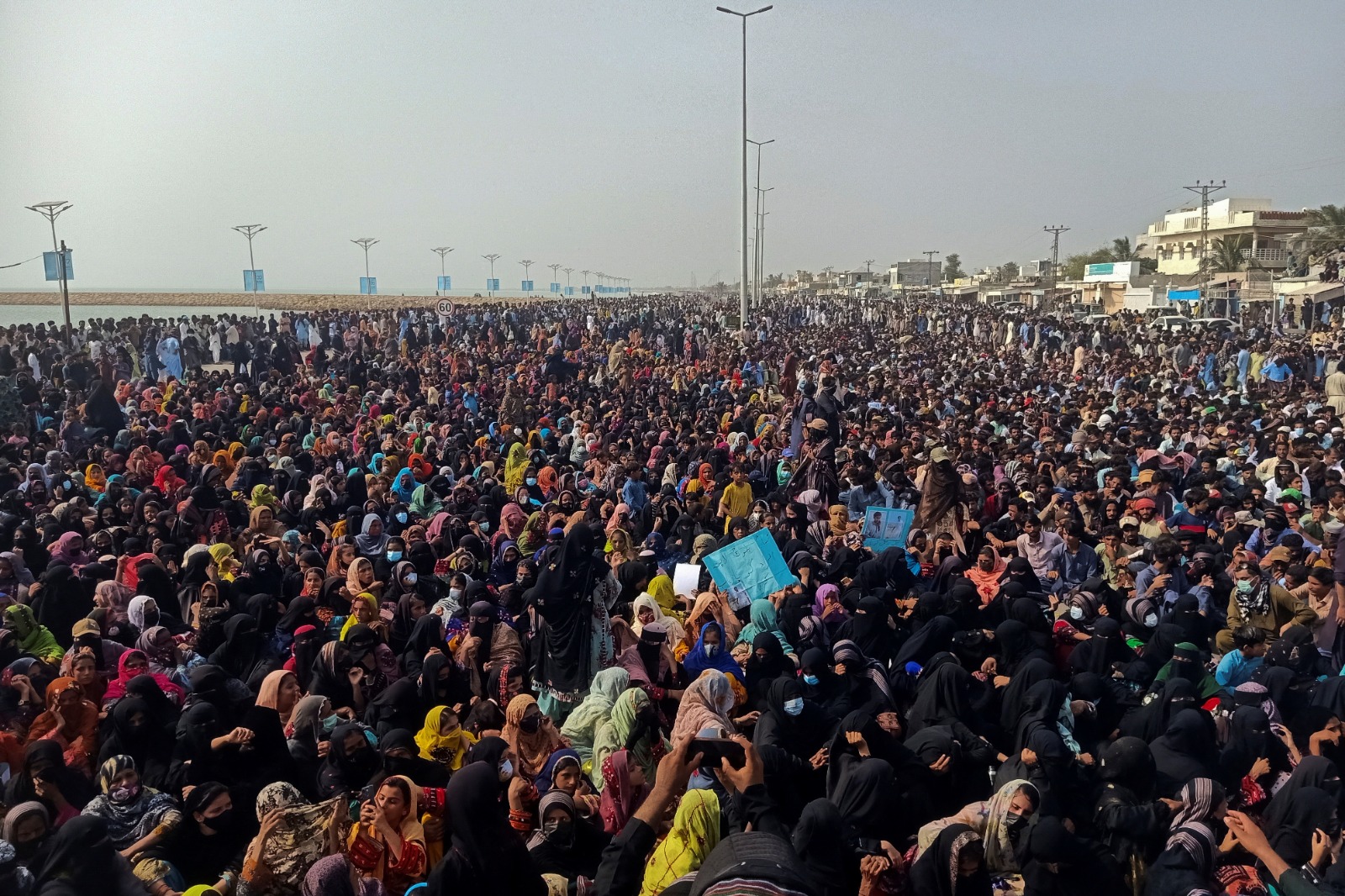
-Arun Anand On 31 January 2026, the recent coordinated attacks claimed by the Baloch Liberation Army (BLA) marked a significant escalation in the long-running insurgency in Pakistan’s Balochistan province. For the first time, coordinated operations were carried out simultaneously across twelve cities, including Quetta, Gwadar, Mastung, Noshki, Dalbandin, Kalat, Kharan, Panjgur, Pasni, Turbat, Buleda, and Kech. Both men and women actively participated—not merely as suicide bombers, but as combatants—reflecting the depth of desperation and grievances among Baloch communities. The BLA announced the launch of “Operation Herof Phase II” at the outset of the attacks, framing the coordinated assaults as part of a planned campaign targeting Pakistani security posts and Chinese infrastructure. In its statement, the group said: “We carried out coordinated attacks across multiple cities in Balochistan, striking military, police, intelligence, and administrative installations. We neutralised over 80 enemy personnel, took 18 hostages, and destroyed more than 30 government properties. Our fighters, including members of the Majeed Brigade, advanced across various areas with mutual coordination, temporarily restricting the movement of Pakistani forces.” Independent reports suggest total fatalities, including militants, security personnel, and civilians, may exceed 125, highlighting the intensity of the operations. The attacks caused disruptions to roads, transport, and internet and mobile services in affected areas. Balochistan’s long struggle and Pakistan’s narrative Almost immediately after the attacks, Pakistan once again blamed India, claiming that the violence was orchestrated and supported by foreign actors. Officials, including the military and Interior Minister Mohsin Naqvi, alleged that the attackers were guided, funded, and strategically directed from outside Pakistan, framing the operations as part of a broader plan by India to destabilise Balochistan. Pakistan strategically even refers to the militants as “Fitna‑al‑Hindustan” in state narratives, presenting the attacks as externally driven. India, however, categorically rejected Pakistan’s claims, calling them “baseless” and “frivolous.” A spokesperson from the Indian Ministry of External Affairs, Randhir Jaiswal, stated: “Instead of parroting frivolous claims, Pakistan should focus on its own internal failings and address the longstanding local issues in Balochistan. Allegations against India are baseless and lack any credible evidence. The insurgency in Balochistan is rooted in Pakistan’s internal governance and human rights issues, not external involvement.” This response underlines that Pakistan’s habitual blame-shifting does not address the real grievances at the heart of the insurgency, and merely masks the structural and historical issues within the province. Balochistan derives its name from the Baloch tribe—the largest ethnic group in the region. The Baloch insurgency has a long history, dating back to the very creation of Pakistan in 1948, and has seen successive cycles of resistance over decades. Resistance against the Pakistani state began soon after the incorporation of the princely state of Kalat, and successive cycles of insurgency have occurred in 1948, 1958–59, 1962–63, 1973–77, and from the early 2000s to the present. To attribute a struggle with such continuity solely to external actors is to overlook the deeply local and historically entrenched grievances. The conflict has been sustained by systemic issues: political marginalisation, economic exploitation, demographic anxieties, and widespread human rights violations. Reports document enforced disappearances, extrajudicial killings, arbitrary detentions, and military operations by security forces. Numerous human rights organisations have documented these abuses over decades, highlighting the systemic nature of oppression in Balochistan. Local and regional bodies such as the Human Rights Council of Balochistan (HRCB), Voice for Baloch Missing Persons (VBMP), the Baloch Yakjehti Committee (BYC), and activists like Gulzar Dost have recorded enforced disappearances, extrajudicial killings, and violations of basic civil liberties. National bodies like the Human Rights Commission of Pakistan (HRCP) and international organisations such as Human Rights Watch (HRW) have also reported widespread violations, drawing attention to patterns of abuse, militarisation, and lack of accountability. Additionally, UN human rights mechanisms have expressed concern over disappearances, repression, and human rights infringements, calling on Pakistan to address these longstanding issues. These abuses, combined with limited access to education, healthcare, and basic infrastructure, have fueled resentment and radicalisation. The growing involvement of women in the insurgency is particularly telling. Traditionally, women in conflict zones rarely take up arms unless social collapse and state oppression reach extreme levels. Many Baloch women have joined militant movements not out of ideology, but in response to personal loss, including the disappearance or killing of family members. This underscores the severity of state brutality and the absence of peaceful avenues for redress. Economic exclusion and unrest Balochistan occupies nearly 44 per cent of Pakistan’s territory and is rich in minerals, natural gas, coal, copper, gold, and strategic ports such as Gwadar. Despite this wealth, the province remains Pakistan’s poorest, with insufficient roads, hospitals, schools, electricity, and employment opportunities. Most benefits from the region’s resources flow to Punjab and the federal centre, leaving Balochistan politically and economically marginalised. This structural imbalance lies at the heart of the insurgency. The BLA’s focus on Chinese infrastructure, particularly Gwadar port under the China–Pakistan Economic Corridor (CPEC), highlights local resentment against projects seen as extractive and non-inclusive. For many Baloch communities, CPEC and Gwadar are symbols of dispossession rather than development. While these projects bring heavy investment and modern infrastructure, locals report that basic needs like clean water, healthcare, education, and jobs remain largely unmet, and skilled roles are frequently given to outsiders. Coastal communities, particularly fishermen in Gwadar, feel their livelihoods have been disrupted by large-scale projects, Chinese trawlers, and strict regulations, deepening the sense of exclusion. The region has also seen increased militarisation, with checkpoints, surveillance, and restrictions on movement, creating an atmosphere of control rather than empowerment. In the eyes of many Baloch, CPEC benefits outsiders and central authorities while ignoring the real needs of the local population, fueling political grievances and, in some cases, militant resistance. Pakistan’s habitual blaming of India for every major incident is counterproductive. Even if external actors were hypothetically involved, no foreign power could sustain an insurgency for over seven decades without internal grievances. The term “Fitna-ul-Hindustan” may serve short-term political narratives, but it obscures structural and historical realities, allowing problems to fester rather than be resolved. Balochistan does not require more troops or scapegoating. What it urgently needs is political accommodation, through meaningful autonomy and inclusive dialogue, along with
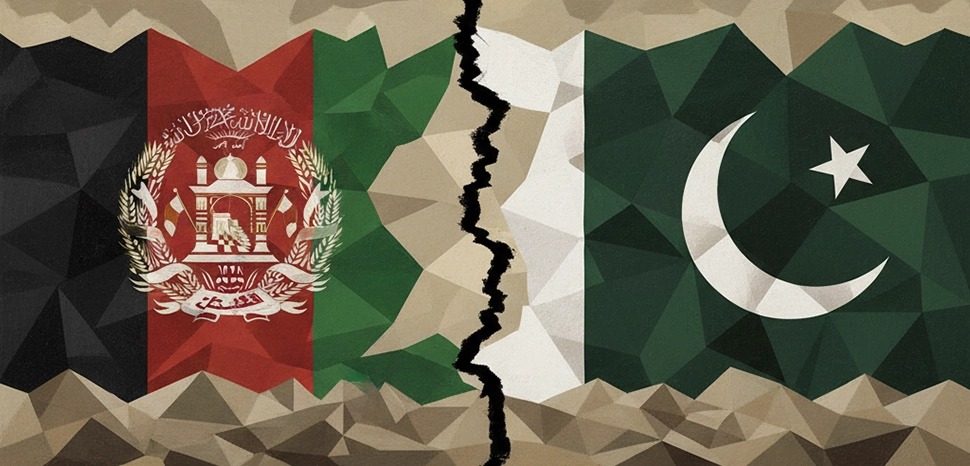
-Arun Anand For decades, Pakistan has insisted that stability in Afghanistan is essential for its own security. Yet today, Islamabad is pursuing a policy that does exactly the opposite by strangling Afghanistan’s fragile economy. The objective is to ‘coerce’ the Afghan Taliban government into submission. The prolonged closure of key border crossings along the Durand Line, including Torkham between Khyber Pakhtunkhwa and Nangarhar and Chaman-Spin Boldak between Balochistan and Kandahar, has turned geography into a weapon. It is a classic case of Pakistan weaponising Afghanistan’s landlocked reality in order to force political compliance through economic suffocation. Border Closures as Economic Warfare For more than four months since October 2025 heavy military clashes, these border crossings have remained shut. The informal cross-border trade that has been a feature of Afghanistan-Pakistan relations since decades. Millions of Afghans depend on this for daily survival. With the daily movement of essentials like food, medicine, fuel, and construction materials effectively stopped, Afghans face a severe crisis as Afghanistan used to export much of its agriculture and horticulture produce besides coal to the Pakistani market. The cross-border trade between the two countries saw a 40 per cent decline in 2025 from 2024, down from over $2.64 billion to $1.77 billion. For a landlocked country already reeling from international sanctions, frozen assets, and humanitarian crisis, the impact has been more than severe. And Pakistan knows this, which is precisely what gives its policy a coercive power. Islamabad has justified the border closure by accusing the Afghan Taliban of sheltering terrorist groups such as Tehreek-e-Taliban Pakistan (TTP), besides enabling attacks by Baloch insurgents like the Balochistan Liberation Army (BLA). On January 20, Prime Minister Shehbaz Sharif repeated this familiar refrain, insisting that while the blockade “should not have been there”, and yet warning that Afghanistan must decide “whether it wants to live peacefully or not”. But this rhetoric serves as a smokescreen. While the struggle with militancy is real and deeply destabilising for Pakistan, the current crisis cannot be explained solely or even primarily by security concerns. From ‘Strategic Depth’ to Strategic Frustration Instead, it reflects a deeper failure of Islamabad’s Afghan policy, one that has left Pakistan’s military-dominated establishment frustrated, exposed, and resorting to blunt instruments to regain leverage over Kabul. It may be recalled that when the Taliban returned to power in August 2021, Pakistan’s political and military establishment celebrated openly. The American withdrawal and the collapse of the Western-backed Afghan government were hailed as a vindication of decades of strategic investment. Senior generals spoke of “strategic depth” finally being secured, with then Director General of Inter-Services Intelligence (ISI) famously sipping coffee in Kabul the next day. There was a kind of confidence among Pakistani experts and establishment figures that finally a pliant Kabul would align closely with Islamabad’s regional priorities. The expectations were sweeping. A Taliban-ruled Afghanistan, it was believed, would deny India any influence in the country besides erasing New Delhi’s soft-power gains built through billions of dollars in infrastructure, education, and development projects. It would accept, or at least stop contesting, the legitimacy of the Durand Line, a colonial-era boundary that cuts through Pashtun lands and has never been formally recognised by any Afghan government, including Taliban in its previous rule from 1996 to 2001. And most importantly, the expectation from the Taliban government was to rein in anti-Pakistan terrorist groups like TTP operating along its porous frontier. None of this has materialised. Instead, Pakistani leadership now finds itself facing an Afghan Taliban leadership that is assertive and nationalist as well as far less malleable than they had anticipated. Taliban officials speak openly of Afghan sovereignty and have pushed back the Pakistani pressure. They have raised the pitch over the legitimacy of Durand Line hence continuing a long-standing Afghan position that cuts across ideological lines. The result of Pakistani stubbornness means that their relations have grown increasingly tense as marked by border skirmishes, diplomatic barbs, and mutual accusations. Security Rhetoric and Failing Coercive Strategy The resurgence of the TTP has been particularly exasperating for Islamabad. Since the Taliban’s return to power in 2021, the group has grown bolder and launched multiple attacks across Pakistan’s northwest. For instance, 667 Pakistani soldiers were killed in 2025 alone as per a report by Pakistan Institute of Conflict and Security Studies (PICSS), up by 26 per cent from 2024. Likewise, Baloch insurgent violence has also intensified, which has fed a sense of encirclement within Pakistan’s security establishment. Interestingly, rather than addressing the domestic roots of these insurgencies prevalent across KP and Balochistan, such as political exclusion, economic neglect, and heavy-handed military policies, Islamabad has chosen to externalise blame, pointing squarely at Kabul. This is where the accusation that the Afghan Taliban are “backing” the TTP and BLA becomes politically useful for Pakistan. It allows the establishment to escape any calls for accountability over the serious security debacles and present its coercive measures against Afghanistan as defensive. The tactic of Pakistan leveraging Afghan geography to achieve what its diplomacy has failed to deliver fits a broader pattern of attempts to salvage its failed Afghan strategy. After having overestimated its influence over the Afghan Taliban, its military-dominated establishment now oscillates between coercion and complaint. The mass deportation of hundreds of thousands of Afghan refugees over the past few years is part of the same effort. Though they have framed this measure through legal and security cover, the expulsions have nonetheless added to Afghanistan’s humanitarian burden while signalling Pakistan’s willingness to use vulnerable populations as leverage. The irony is hard to miss as Pakistan’s leaders insist that instability in Afghanistan threatens regional peace and yet their policies actively deepen that instability. They are willingly overlooking the fact that economic strangulation does not produce compliance and restore lost influence; rather, it breeds resentment and exposes the limits of such a policy. Nevertheless, Pakistan’s attempt to weaponise Afghanistan’s landlocked status reveals less about Taliban culpability than about Islamabad’s strategic frustration as their grand vision of a compliant, controllable Afghanistan has