
India’s strategic community is sounding alarm bells over a noticeable uptick in security and defence cooperation between Pakistan and Bangladesh, interpreting the warmer ties as a potential challenge to New Delhi’s influence in South Asia and a shift in regional alignments.
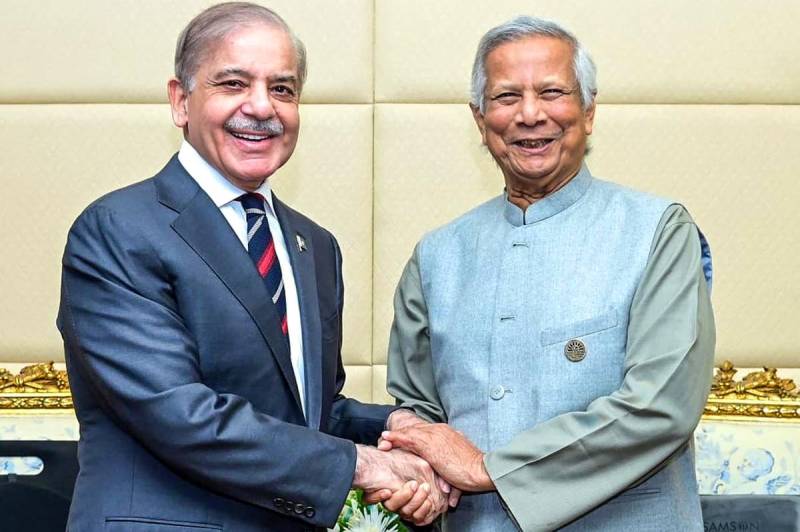
Since former Nobel laureate Muhammad Yunus assumed leadership of Bangladesh’s interim government after the political upheavals of 2024, Dhaka has embarked on a diplomatic reset, engaging more actively with Islamabad and other regional players. High‑level military exchanges, increased defence dialogue and new trade and logistics initiatives have sparked debate in New Delhi about the implications of this shift for India’s eastern flank and overall national security calculus.
Deepening Defence and Strategic Ties
Recent years have seen Bangladesh and Pakistan strengthen military and security cooperation—with frequent reciprocal visits by senior army officers, discussions on intelligence sharing and signals of future joint training and exercises. These developments represent a departure from Dhaka’s historically India‑centric security partnerships that dominated under the ousted Sheikh Hasina era.
In response to these engagements, Indian analysts argue that the relationship goes beyond routine defence diplomacy, potentially reflecting a strategic realignment that could affect New Delhi’s traditional role as Bangladesh’s principal security partner. There are concerns that collaborative defence initiatives could lead to a deeper presence of Pakistani and allied intelligence assets near India’s vulnerable eastern border region.
Economic and Logistical Dimensions
Alongside defence cooperation, Pakistan has extended economic overtures to Bangladesh, including proposals for access to Karachi Port and eased trade logistics that could integrate Bangladeshi supply routes with Pakistani trade corridors. Analysts view such economic cooperation not simply as commerce but as part of a broader attempt to embed Islamabad into Dhaka’s strategic outlook, potentially undermining India’s influence in South Asia’s economic and logistical networks.
The combination of these steps—military exchanges and logistical links—feeds Indian apprehension about a nascent Islamabad–Dhaka–Beijing triangle, where Bangladesh pivots towards partners historically antagonistic to India.
Regional Security Implications
India’s strategic concerns are amplified by the porous 4,000‑kilometre Indo‑Bangladesh border, which has historically been susceptible to illegal crossings, smuggling and insurgent movement. Enhanced military ties between Dhaka and Islamabad could, according to some Indian security analysts, provide opportunities for proxy networks or extremist elements to exploit weakened Indian influence, particularly in the northeastern states.
Reports from independent security observers also suggest that Pakistan’s intelligence agencies have been attempting to leverage evolving political currents in Bangladesh to re‑establish networks that pre‑date the 1971 Liberation War, using porous borders and political realignments to advance strategic objectives.
Historical Memories and Public Sentiment
Historical memory adds another layer of complexity. Many in Bangladesh still recall the brutal 1971 Liberation War and harbour deep scepticism toward Pakistan’s intentions. Polling within strategic circles in Bangladesh highlights public unease with closer ties to Islamabad, seen by some as inconsistent with national dignity and historical truth.
This sentiment, however, contrasts with the interim government’s pragmatic diplomacy, which seeks to diversify alliances and counterbalance what it perceives as over‑dependence on any single partner. Dhaka insists that its engagements are aimed at safeguarding national interests and expanding regional connectivity rather than aligning against any neighbour.
India’s Strategic Response
New Delhi has taken note of these shifts with caution. Officials and strategic analysts emphasise the need to reaffirm India’s longstanding security and economic partnership with Bangladesh, especially in areas like counterterrorism, border management and regional connectivity. India remains Dhaka’s largest trading partner and principal source of military training and development assistance—a relationship it aims to preserve amid changing geopolitical undercurrents.
Security think tanks in India are urging heightened diplomatic engagement and enhanced intelligence cooperation to ensure that evolving dynamics do not translate into vulnerabilities along India’s eastern borders or erode its influence in a key regional partner.
The Road Ahead
As Bangladesh navigates its foreign policy post‑Hasina, the recalibration towards Pakistan comes at a delicate moment for South Asian geopolitics. Analysts in New Delhi and across the region caution that while sovereign states have the right to diversify partnerships, careful balancing and transparent diplomacy will be essential to avoid exacerbating tensions in an already volatile neighbourhood.
Whether deeper ties between Dhaka and Islamabad will evolve into enduring strategic realignments or remain limited to issue‑specific cooperation remains a subject of ongoing debate among policymakers and regional experts.