
-Arun Anand
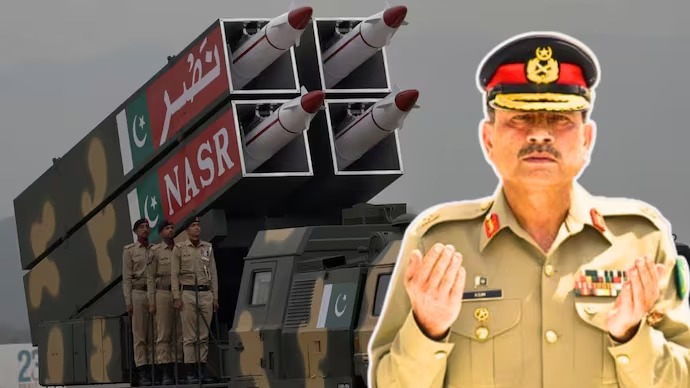
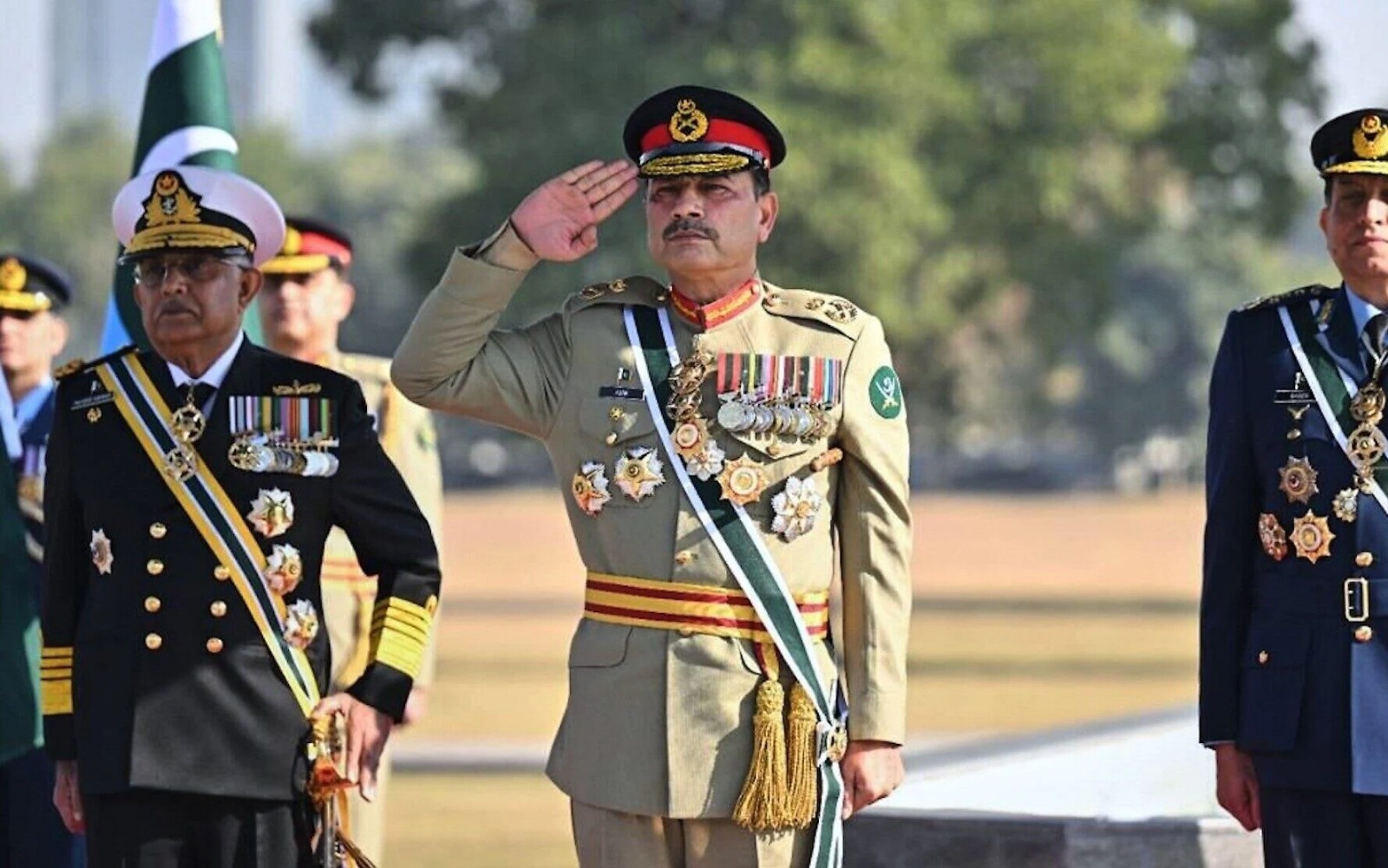
Every country has moments when a single figure, through temperament as much as circumstance, shifts the balance of its political order. In Pakistan today, that figure is Field Marshal Asim Munir. Analysts often describe his rise in familiar language, discipline, institutional confidence, and careful preparation.
But this doesn’t quite capture the way he has consolidated authority or the psychology behind those moves. A better way to make sense of his imprint is to look at him through the Thick Face-Black Heart lens, a framework from Chinese strategic thought that highlights a person’s ability to absorb humiliation without blinking and to impose their will without sentimental hesitation. It is not a flattering theory, but it is an accurate one for a leader who has altered Pakistan’s political landscape with a mix of silence and severity.
Munir’s career did not follow the trajectory of a man destined for sweeping power. His years in military intelligence, including the short-lived tenure as DG ISI, exposed him to the brutal currents of Pakistan’s political machinery. When he was removed abruptly and with enough public visibility to sting, it seemed like one of those episodes that cut promising careers in half. Yet he responded with a peculiar stillness. He did not leak stories to the press, did not cultivate a faction to avenge the slight, and did not attempt a public rehabilitation campaign. He simply stayed put, watched, and waited. That kind of emotional discipline is rare in Pakistan’s power circles, where bruised egos often leave trails of chaos.
Munir’s ability to absorb that injury and carry on without outward bitterness said more about him than any official posting ever could. He has nurtured this kind of attitude since his early days in the Pakistan Army, as during a staff course at that time, (Major) Munir was given the title of ‘deceiver’ by his course-mate officers.
When he re-emerged in positions of influence, first as Corps Commander then as Quartermaster General, it became clear that he saw institutions not as ladders to climb but as structures to study. He built loyalty by being reliable, not charming; precise, not theatrical. By the time he became Army Chief, he had internalised a lesson that many powerful men learn late and painfully: you survive by showing as little of yourself as possible. That instinct for opacity, for silence as a form of strength, is the “thick face” part of his psychology. It allowed him to weather political storms without leaving fingerprints.
After taking command, however, a different side of him surfaced. This was the colder, unsentimental edge that the “black heart” portion of the theory describes. The handling of the May 9 unrest revealed it most clearly. An institution that usually protects its own was suddenly willing to sacrifice high-ranking officers; one serving lieutenant general was removed, several major generals and brigadiers faced proceedings, and the message travelled quickly through the ranks: ambiguity was no longer acceptable.
Loyalty would not be inferred; it would be demonstrated. No chief in recent memory had gone after his own officer corps with such quiet precision. There was no bluster, no televised fury. Just action, executed without sentiment. This internal consolidation flowed naturally into political centralisation. Intelligence coordination became tighter, and the usual patchwork of informal channels between senior officers and political elites began to close. Pakistan’s power structure has historically tolerated multiple “centres of gravity” within the military—commander-level networks, intelligence cliques, and backchannel negotiators. Munir dismantled that arrangement without announcing it. Everything began to tilt toward GHQ, and more specifically, toward his office.
The political realm, already fragile, bent even faster. PTI’s disintegration did not occur by accident or due to political incompetence alone. It happened through a systematic squeeze: mass arrests, cases under terrorism laws, long sentences, and a media environment in which the country’s most popular political figure could vanish from the screen for months. The state had used pressure before, but this time it felt different. There was a seriousness to it, a determination to eliminate not just the party’s leadership but the party’s very presence in public life.
This shift had a profound effect on the older parties as well. PML(N) and PPP, both seasoned in the art of negotiating with the establishment, slowly realised that the usual bargaining space no longer existed. Their agreement to constitutional changes that weakened the judiciary, formalised the military’s upper hand, and paved the way for a Chief of Defence Forces position told its own story. They were no longer negotiating with the military; they were adjusting themselves to an institutional reality shaped entirely by it. Munir did not cajole them into compliance; he simply created a structure in which their compliance became the path of least resistance.
The legal remodelling that accompanied this political shift was just as significant. The old hybrid order worked because of its messiness, courts sometimes pushed back, parliament sometimes resisted, and the military exerted influence without admitting it. Munir’s approach was to strip away the ambiguity. Judicial oversight over key decisions was narrowed. Constitutional interpretation was rerouted toward structures less likely to confront the military’s strategic interests. Even the symbolic principle that the largest bloc in parliament should form the government collapsed under this new logic. The 2024 elections did not merely produce a strange mandate; they produced a political arrangement in which electoral strength had meaning only if it aligned with the establishment’s preferences.
Control over information completed the picture. Channels were taken off air, journalists were pressured, and digital spaces were targeted through bans and intimidation. Pakistan has always had red lines around the military, but these lines have become wider and more sharply enforced. Critique did not disappear entirely, but it was pushed into the margins, away from the audiences that once relied on it to make sense of the state’s direction. The informational space became curated rather than contested.
Taken together, these shifts reveal something beyond conventional military dominance. They signal the end of the hybrid model itself. Pakistan still performs the rituals of democracy, elections, speeches in parliament, and televised interviews, but these rituals now operate inside a cage whose walls have been reinforced. The space for dissent, negotiation, or institutional self-assertion has shrunk so dramatically that the form of democracy remains while its content drains away.
This transformation carries a deeper cost for the state. A political order built around one office, however disciplined its occupant, becomes structurally fragile. Civilian institutions lose both capability and confidence when sidelined for too long. Courts that cannot arbitrate major questions eventually lose public authority. Political parties that survive on borrowed space lose the ability to channel public frustration. A press that cannot interrogate power loses its purpose.
Munir’s rise, methodical as it was, has created a system that depends heavily on his ability to maintain control. It may produce temporary calm, but it does so by weakening the very institutions that give states longevity. The paradox of his authority is that its solidity makes the system around him brittle. Once power concentrates to such an extent, it becomes harder, not easier, for the state to adapt when the circumstances change or when leadership eventually passes on.
What Pakistan confronts now is not simply the dominance of one field marshal, but the slow hollowing-out of democratic life. The façade is still there, but the architecture behind it has shifted. Munir embodies the psychology of survival and imposition central to the Thick Face-Black Heart theory. Through patience and severity, he has remade the political order. But in doing so, he has also made the state more dependent on command than on consensus. That dependence may be the most dangerous legacy of all.