

– Arun Anand
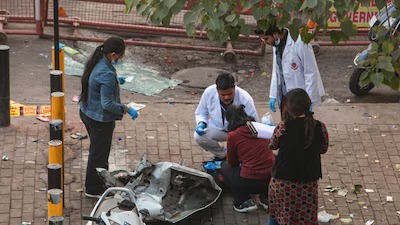
India’s investigation into the bombing of November 10 near Delhi’s Red Fort has peeled back yet another layer of a problem that New Delhi has long warned the world about: Pakistan’s enduring role as a state sponsor and safe haven for jihadist terrorism. Fifteen people have been killed in the attack, carried out just two days after the Jammu and Kashmir Police quietly uncovered a sophisticated terror module operating far from the stereotypical image of gun-wielding militants. This network, led by highly educated professionals including doctors, has now been traced directly back to the Jaish-e-Mohammad (JeM) and transnational Ansar Ghazwat-ul-Hind (an affiliate of Al Qaeda), both Pakistan-based groups fostered by the country’s military establishment.
The arrests mark one of the most troubling cases in recent years — not only because of the carnage in the heart of the Indian capital but because of what they reveal about the evolution of Pakistan’s proxy warfare machinery. A “white-collar” terror module, with operatives embedded in colleges and hospitals, radicalised digitally, guided remotely and transnationally, and supervised by handlers working under the protective umbrella of Pakistan’s security apparatus, underscores how deeply entrenched and globally connected Islamabad’s militant factories remain.
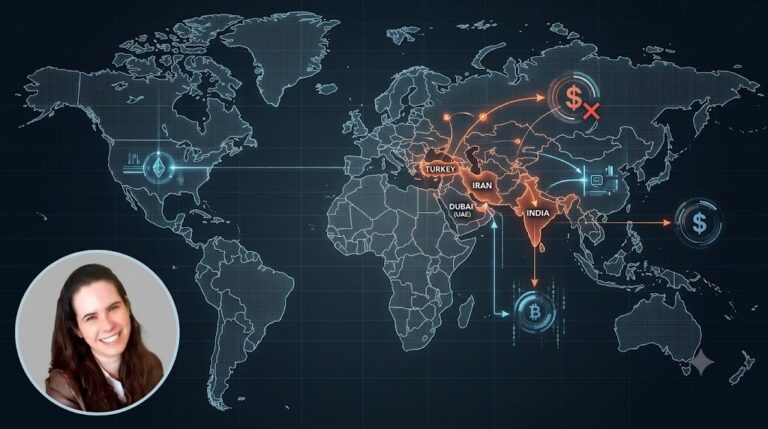
For India, the revelation is hardly surprising. For the international community, it should be alarming. Indian security agencies have now established that the Delhi module’s leaders maintained active communication with Pakistan and Turkey-based controllers ostensibly linked to JeM chief Masood Azhar. If there were any doubts about JeM’s operational revival after years of supposed crackdowns in Pakistan and India’s Operation Sindoor, the Delhi blast should put them to rest. More importantly, the module’s exposure reiterates an uncomfortable truth: despite periodic claims of counter-terror reforms, Pakistan’s soil continues to nurture and export jihadist groups as an instrument of statecraft. Masood Azhar is believed to be living comfortably in Pakistan, protected rather than prosecuted.
The timing of this exposure is equally significant. They come on the heels of Operation Sindoor, India’s unprecedented cross-border strikes on May 6 and 7 targeting terrorist infrastructures across Pakistan-occupied Jammu & Kashmir and inside Pakistan’s heartland besides several military facilities. Among the targets was JeM’s headquarters in Bahawalpur, the Markaz Subhan Allah, where ten members of Azhar’s family and four of his trusted lieutenants were killed. It was acknowledged by his senior jihadi associate Ilyas Kashmiri who is on record stating that Azhar’s family was torn apart by Indian strikes.
What was instructive then was how senior Pakistan Army officers and civilian government officials were present at funerals for Azhar’s aides, thereby exposing Pakistan’s “good” and “bad” distinction of terrorists, which it often invoked to justify selective counterterrorism efforts.It is no secret how Pakistan has used terrorism as a key component of its regional policy since decades. Though it may have started with Afghan Jihad in 1980s, it successively patronised the establishment of a network of India focused groups such as JeM, Lashkar-e-Taiba (LeT), and Hizbul Mujahideen, ostensibly to bleed India at a minimal cost through this proxy war.
Be it the infrastructure for recruitment, training, and indoctrination, it has allowed these groups to thrive under various guises like religious charities, madrasa networks, social welfare groups, and sometimes openly paramilitary outfits. For instance, LeT of Hafiz Saeed is fronted by his Jamatud Dawa charitable organisation. What sets the present moment apart is not the existence of these groups but the brazenness with which they operate under Pakistan’s current military leadership. While Islamabad routinely assures global audiences that terrorist activity has been curbed, evidence on the ground suggests the opposite: terrorist organisations are diversifying their recruitment pools, expanding digital operations, improving financial concealment, and deepening their operational cooperation.
The Delhi module’s composition of educated, professionally accomplished individuals recruited ideologically rather than preying on economically vulnerable ones demonstrates a dangerous shift. These are not fringe radicals but inconspicuous by being embedded in mainstream society, efficient at building clean identities, and less likely to attract suspicion to travel freely and avoid security red flags. This is not the work of rogue actors. It reflects a coherent strategy. This appears to be getting systematised under current Pakistan Army Chief Field Marshal Asim Munir under whom Pakistan is undergoing a dangerous power consolidation by the powerful military establishment. Munir’s actions suggest Pakistan Army’s old reliance on militant proxies returning even as the country itself grapples with heightened levels of extremism from its former proxies like Tehreek-e-Taliban Pakistan (TTP) and Baloch nationalist insurgents.
Under Munir, the military has consolidated power across civilian institutions, tightened its grip on internal dissent, and centralised strategic decision-making. This is exemplified by the recent 27th Constitutional Amendment which provides the legal cover to Asim Munir’s actions by extending him lifetime of immunity as Field Marshal and making him the overall chief of all the armed forces of Pakistan. But on the question of terrorism, the signals have been unmistakable with groups like JeM and LeT still seen as vital instruments of Pakistan’s regional calculus. Moreover, Munir’s public rhetoric has grown more hawkish, echoing the confrontational doctrines of previous generals who viewed militancy as a cost-effective extension of state policy.
In that context, the presence of senior army officials at the funerals of JeM operatives killed during Operation Sindoor was more than symbolism; it was an official endorsement of the terror policy. It signalled to the jihadist ecosystem that Pakistan’s military elite remains committed to the decades-old compact: continue fighting India and, in exchange, receive protection, funding, and freedom of movement. Internationally, Pakistan has mastered the art of performing compliance. It arrests foot soldiers while sparing the leadership. It shutters organisations only to allow them to reappear under new names like The Resistance Front (TRF) for LeT and People’s Anti-Fascist Front (PAFF) for JeM. It serves on the UN bodies on counterterrorism while patronising terrorists through the back door. The aim is not to eliminate terrorism but to manage it by tightening or loosening the tap depending on geopolitical incentives.
Unfortunately, Western governments led by the United States have often been complicit in allowing Pakistan to play this double game by prioritising short-term strategic interests. It has resulted in a perverse equilibrium where Pakistan may suffer from homegrown extremist violence and yet nurtures groups that attack its neighbours simultaneously.As such, the Delhi bombing and the terror module’s exposure should force a reassessment, as a country that cannot or will not dismantle the terror ecosystem responsible for destabilising an entire region cannot be treated as a credible partner in global counterterrorism. It is not merely a domestic law-and-order story of India but a reminder that Pakistan’s terrorist infrastructure remains intact, adaptive, and internationally connected. It is also a warning that Pakistan’s military leadership, despite rhetorical commitments to stability, continues to rely on terrorism as a tool of state policy.