
Every time one looks up Pakistan on the internet, one is bombarded with news of death, destruction, and discrimination. The country, which was carved out of India in 1948, with the vision of creating a safe territory for the minorities of the subcontinent, has devolved into a place where the majority of people endure some or the other form of oppression and threats, under a state that is always on the edge of collapse. Most recently, a disturbing video of a man and woman being shot to death by a bunch of men in the Balochistan province has emerged on social media. Investigation has revealed it to be a case of so-called ‘honor killing’ ordered by a local tribal leader and executed by the woman’s brother. Such killings based on archaic notions of ‘honor’, gender-based violence, persecution of religious and ethnic minorities, civilian killings by militants, and state-orchestrated killings in the name of counter-terrorism and counter-insurgency, and more, pervade the news cycle in the country where the elites who lead the security forces are immersed in amassing political and economic capital, more than providing security to the citizens.
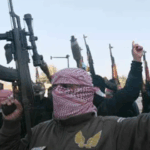
Although Pakistan has a long history of being both a promoter and victim of terrorism, the crisis has particularly aggravated since the August 2021 resurgence of the Taliban in neighbouring Afghanistan. As the US left the country after a 20-year-long protracted war, much of the sophisticated weaponry that it had provided for the Afghan army found itself in the hands of the Taliban and Pakistan-based militant insurgent groups, specifically the Tehreek-e-Taliban Pakistan (TTP) and Baloch Liberation Army (BLA). Overnight, these groups swelled in capacity, exacerbating the security crisis for Pakistani forces as well as civilians. The Global Terrorism Index report of 2025 placed Pakistan in the 2nd position, noting 1,081 terrorism-related fatalities and 1,099 terrorist attacks in 2024.
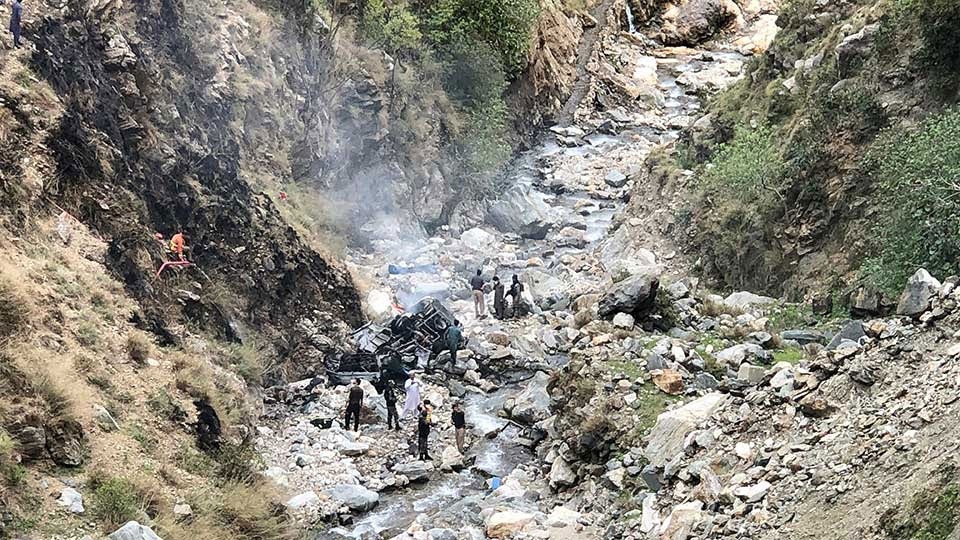
In the past years, these groups have also scaled up their attacks on Pakistanis from other provinces as well as foreigners, particularly Chinese workers. In August last year, in a chilling incident, the BLA militants forced out 23 passengers from a civilian bus, checked their identity cards, and killed them after establishing that they were Punjabis. In March 2024, a suicide bombing killed 5 Chinese engineers working on a dam project in Khyber Pakhtunkhwa. The rise in attacks on Chinese workers has become a sore point between Pakistan and China, threatening to jeopardize the China-Pakistan Economic Corridor.
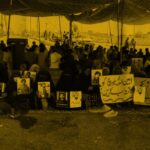
Additionally, the Pakistani military’s response to these terrorist groups has also opened up another security threat for the people. In Balochistan, in the name of countering the long-standing insurgency, the state has routinized enforced disappearances, custodial killings, and torture, without any accountability. Although it is very difficult to ascertain the exact number of forcefully disappeared people, to get an idea of the scale of this tragedy, one can refer to the Human Rights Watch report which has recorded 8,463 cases of missing persons between 2011 and January 2024 or the Pakistan Commission of Inquiry on Enforced Disappearances (COIED) which registered 10,078 cases. A civil resistance movement led by women has also emerged in the past couple of years, demanding accountability from the state for its excesses in Balochistan. However, it has been violently quelled, with its leaders incarcerated.
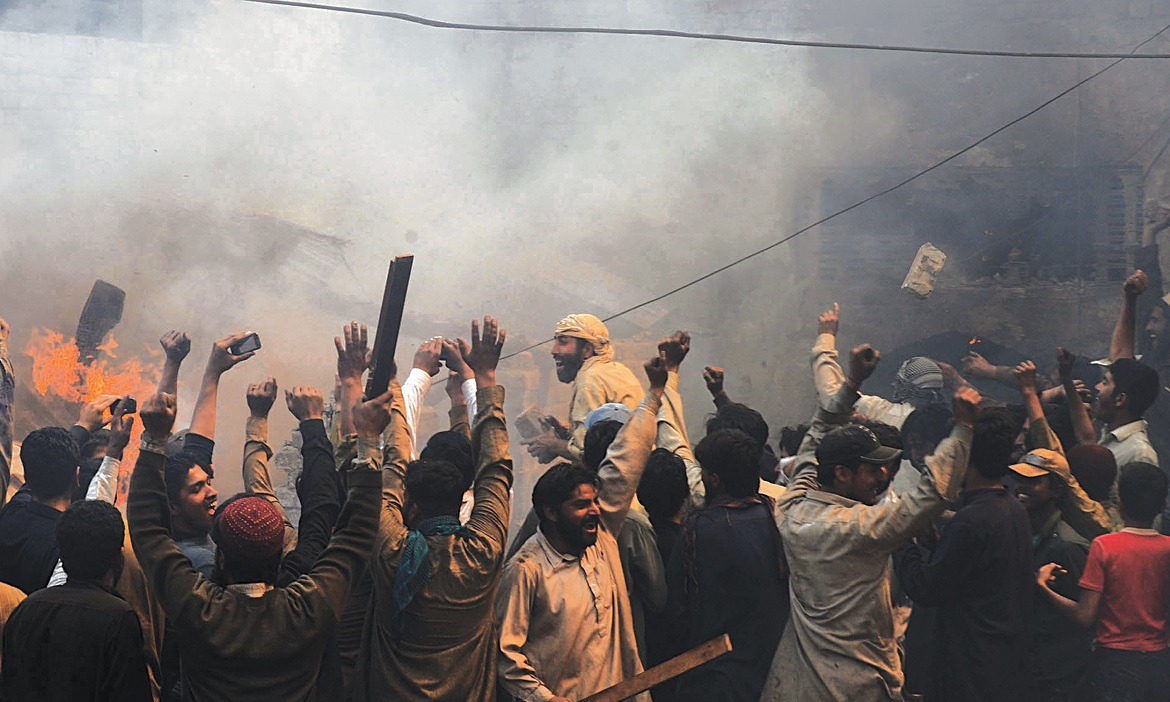
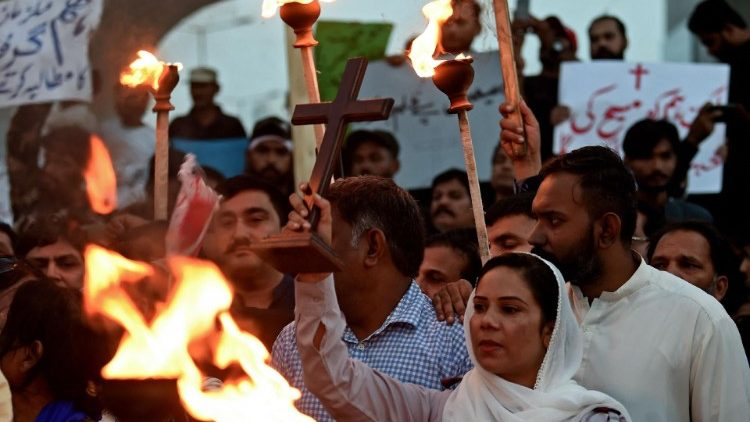
Since the founding of Pakistan on religious lines, there has been a concerted effort by the state to marginalize and erase its religious minorities, most prominently Hindus, Christians, and Sikhs. Besides systemic discrimination, cultural marginalization, and destruction of places of worship, religious minorities constantly face the threat of violence, ostracization, and forced conversions. Around 20-25 Hindu girls are estimated to be kidnapped and converted in Sindh every month. The police and judiciary often exempt the perpetrators who often enjoy social influence and support for ‘scoring’ a conversion to Islam. The draconian blasphemy law is another tool with which religious and sectarian minorities (Shias and Ahmadis) are persecuted. More disturbingly, when someone weaponizes the blasphemy accusation, often the cases do not even reach the courts as the enraged public murders the accused by themselves. At least 70 people have been reportedly murdered over blasphemy accusations since 1990. This figure includes the notorious killing of the Sri Lankan Christian worker Priyantha Kumara. The discourse around the law is so charged that anyone who dares to oppose it faces the same threat of being lynched. Prominent political figures such as the former governor of Punjab Salman Taseer and former Federal Minister for Minorites Shahbaz Bhatti have been assassinated for opposing the law, and judges who either convict vigilantes or acquit the falsely accused have to flee the country to save their lives.
When it comes to women, regressive social attitudes and a decrepit administration have led to a scenario where crimes like harassment are only routine but normalized. According to a Women Safety Audit undertaken by UN Women in 2020, over 80% women reported facing harassment in public places. Women are also the overwhelming targets of so-called honour killings- the Human Rights Commission of the country registered 405 cases in 2024 alone, most of them against women. As per data by the Sustainable Social Development Organization, only one of the 32 cases reported in the Balochistan province this year has led to a conviction, pointing to the dire situation where state neglect has emboldened criminals and proliferated such a heinous crime.
Despite the terrifying picture that the above instances and analyses paint about Pakistan, it is still only scratching the surface. In a country beset with administrative disrepair, state-supported religious extremism, ethnic violence, systemic impunity, suppression of dissent, and economic crisis, one can only imagine the daily struggle for survival that people are subjected to. Pakistan urgently requires a radical overhaul of state identity, civil-military relations, and state-society relations. However, given the status quo of absolute state complacency and elite capture, the future of the citizens of the country appears distressingly grim.