
The Balochistan province of Pakistan represents a long-standing festering wound- one that the state, instead of healing, is bent on continually aggravating. The largest, resource-abundant, yet poorest province of the country, Balochistan has been reeling in the crossfire of a chronic armed insurgency and a disproportionate state response, in addition to systemic political and economic marginalization. Even as Pakistan was recently engaged in military confrontations with India- the most severe since the Kargil conflict of 1999, the Baloch insurgents kept intensifying their operations. Now, in the name of more effective counter-terrorism, the government has passed another legislation that threatens to worsen the situation by legitimizing state excesses in the province.
Amid vehement opposition by legal experts, human rights groups, and civil society, the Balochistan Assembly passed the Counter-terrorism (Balochistan Amendment) Act 2025 on June 4. The legislation, which makes new inclusions into the 1997 Anti-terrorism Act, authorizes armed forces, civil armed forces, and intelligence agencies to preventively detain a person for up to three months without any charges or trial. Eliminating judicial oversight, joint investigation teams can now issue detention orders, seize property or other possessions, and conduct ideological or psychological profiling of the detainees, all on their own accord. The Act has been put in place for 6 years, after which it can be extended for a period of 2 years if the provincial government thus notifies.
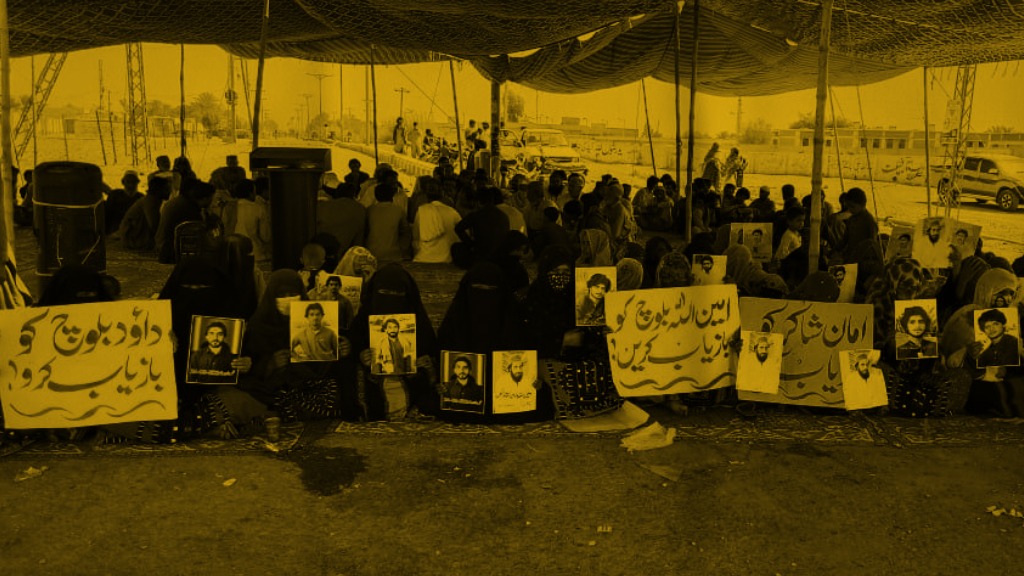
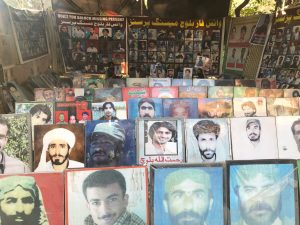
Collective suppression under the garb of combating insurgency and terrorism is far from new in Balochistan. Particularly since the mid-2000s, the Pakistani state has notoriously enacted a ‘kill and dump’ policy and forged an atmosphere where the threat as well as execution of enforced disappearances, custodial torture and killings, fake encounters, and arbitrary detention is part of daily life. This month itself, Pakistan based human rights organisation, the Baloch Yakjehti Committee (BYC), in its bi-annual human rights report, revealed that 752 people were forcibly disappeared from January to June 2025, out of which 181 were later released and 25 died in custody. The report also registered 117 extrajudicial killings in the same period, with most of the victims reportedly being students and young political activists.
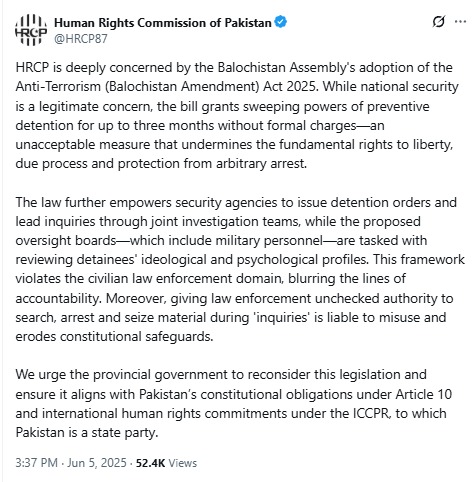
Even when the Act was a proposed bill in the provincial assembly, human rights groups, including Amnesty International and the Human Rights Commission of Pakistan (HRCP), had staunchly opposed its passage over concerns that it would legalize state instrumentalization of enforced disappearances and arbitrary detention. After it was adopted, the HRCP condemned the “sweeping powers of preventive detention” outlined by the Act, which undermine civilian law enforcement domain by involving military personnel in the oversight boards, and contravene the country’s constitutional obligations under Article 10 (legal safeguards for those arrested or detained) as well as its commitments under the International Covenant on Civil and Political Rights. The BYC, too, released a strongly-worded statement, decrying the Act’s “grave violation of fundamental rights, including personal liberty, due process, and protection from arbitrary detention.”
Meanwhile, Pakistani government is projecting the Act as a decisive framework against terrorist forces and something that will help end the issue of missing persons. Balochistan Chief Minister Sarfaraz Bugti described it as a milestone which, according to him, will counter the “organised conspiracy” and “false allegations against state institutions” regarding enforced disappearances. Bugti also claimed that the insurgency in the province is a “foreign intelligence agency driven war” against Pakistan, a narrative that has been parroted for a long time by the Pakistani establishment. This absolute denial and deflection by the authorities point to their utter unwillingness to acknowledge, address, and resolve the plight of the Baloch people, further alienating them and fueling the militancy.
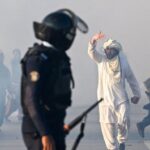
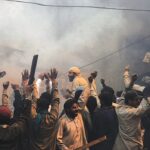
The Baloch people are already subjected to an extremely stifled environment, wherein demands of accountability from the state are constantly misconstrued as separatism, justifying excessive crackdown and harassment. The BYC-led peaceful Baloch civil resistance movement, which has emerged as a resilient force in the past couple of years, has had to face constant vilification, disruptions, harassment, and violent crackdown by the state, with its leaders, including Mahrang Baloch, incarcerated. Rather than taking advantage of a peaceful civilian platform that works towards state accountability and political reconciliation within the federal framework, the heavy-handed response of the Pakistani state creates conditions where peaceful political activism loses relevance and the people, particularly the youth, increasingly view armed insurgency as the only alternative.
Within the context of an ever-ascending insurgency, progressively alienated people, rising attacks on CPEC workers and projects as well as Punjabi migrants, the newly passed amendment act will certainly estrange the Baloch people further. The ensuing state excesses, which will now take on a robe of legal legitimacy, will exacerbate the security crisis in the province. At a point when the Pakistani state must proactively prioritize meaningful political engagement with Baloch grievances, demonstrate accountability and willingness towards politico-economic inclusion and justice for Balochistan, it is almost a suicide run to introduce a blatantly exploitative and tyrannical legislation. By legalizing repression in a province which already represents an existential landmine, Pakistan has truly set in motion its own unravelling.