
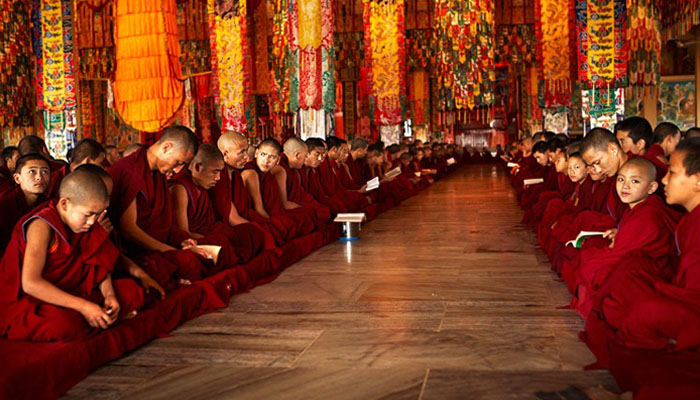
The town of Dharamshala in India’s Himachal Pradesh is bustling with celebration and anticipation as the 14th Dalai Lama is set to turn 90 on July 6. Although as the spiritual and political head of Tibetan Buddhism, the Dalai Lama’s birthday is in itself a hugely significant event, this time, it holds far-reaching importance as His Holiness is expected to share details of his successor.
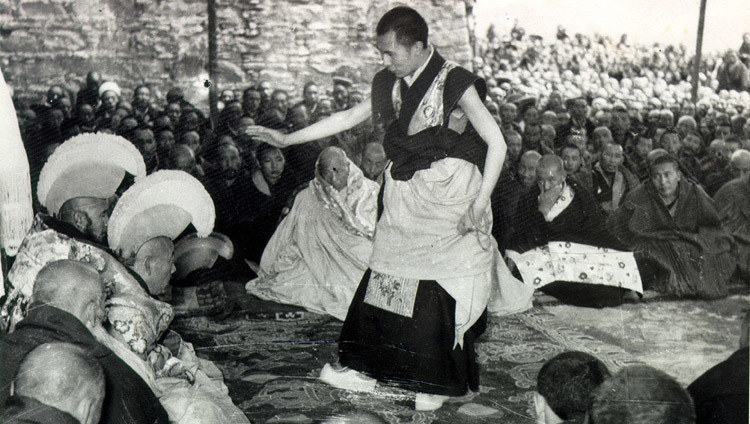
This is not just going to be a spiritually or religiously loaded revelation, but something that the future of the Tibetan people, who have been resisting Chinese control for decades, depends on.
Since the Dalai Lama’s exile into India in 1959, along with thousands of others, in the wake of the Chinese occupation of the Tibetan plateau, he has emerged as a globally recognized and revered embodiment of Tibetan resistance, cultural distinction, and humanitarian values. A Nobel laureate, the Dalai Lama or Tenzin Gyatso was born as Lhamo Dhondup in 1935 in northeastern Tibet, and in two years, he was identified by sacred religious search parties as the incarnation of the 13th Dalai Lama. This is a centuries-old practice within Tibetan Buddhism wherein the reincarnation of top spiritual leaders is decided after their death based on visions and signs interpreted by senior Lamas. This process could take years, resulting in a spiritual and political vacuum of leadership during that time. However, the current Dalai Lama has made a few critical departures in this tradition- firstly, he has suggested that he might give indications regarding his successor while he is alive, a method known as ‘emanation’, and secondly, in his March 2025 book Voice for the Voiceless, he has stated, “Since the purpose of a reincarnation is to carry on the work of the predecessor, the new Dalai Lama will be born in the free world.” By ‘free world’, he is suggesting that his successor will be found outside China, which again, is a divergence from convention.
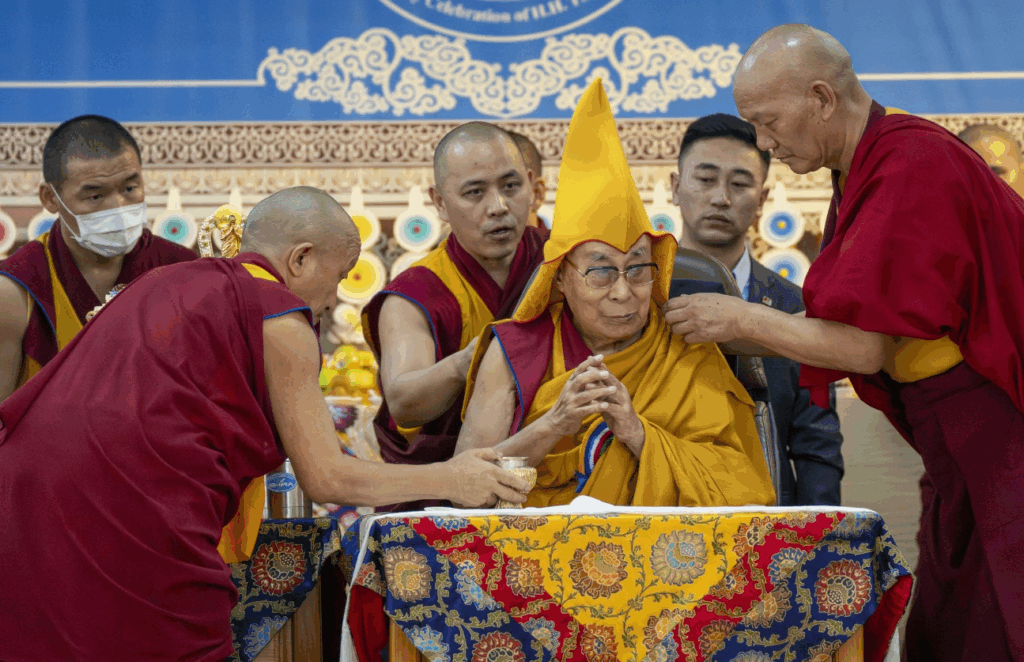
The reasons behind these deviations have to do with the relentless and overwhelming Chinese interference and suppression of Tibetan cultural traditions. The Chinese state, which officially identifies as atheist, has repeatedly declared that it reserves the right to decide on the Dalai Lama’s reincarnation, a practice that it claims to trace to imperial China under the Qing dynasty. To that end, the CCP wants to determine the next Tibetan Buddhist leader through the ‘golden urn’ process (wherein the names of all possible reincarnations are drawn from a golden urn) and to preside over it, it has convened a committee comprising government-selected Tibetan monks and CCP officials.
This is, in no way, the first time that the CCP has attempted to directly intervene in Tibetan Buddhist affairs. In Tibetan Buddhism, the second highest spiritual seat is accorded to the Panchen Lama, who also plays a crucial role in identifying the Dalai Lama’s reincarnation. In 1995, the current Dalai Lama named the 6-year-old Gedhun Choekyi Nyima as the reincarnated Panchen Lama. Within days of the announcement, the boy and his family were abducted, never to be seen again, while the Chinese state propped up their own Panchen Lama, who parrots the party line and endorses Beijing’s sovereignty over Tibet. Therefore, the vital significance of the Panchen Lama in deciding the succession of the Dalai Lama was a chief motivation for the CCP to intercept this seat, which raises anxieties about the future of the figure of the Dalai Lama itself.
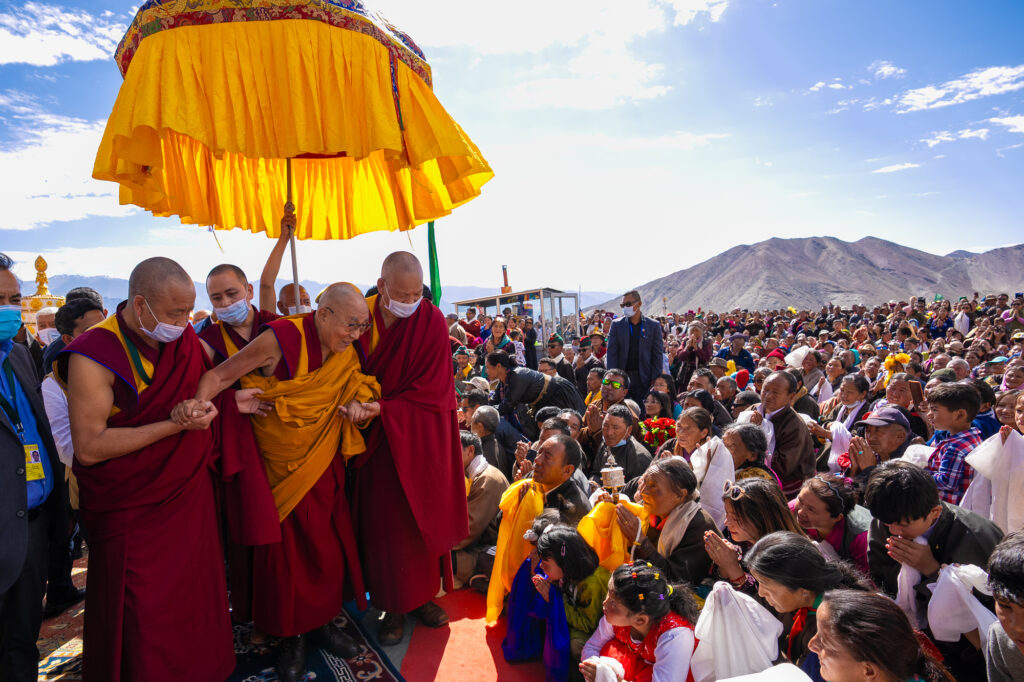
As the Dalai Lama gets older, the apprehension that there might be two Dalai Lamas, one based on suggestions by the current Dalai Lama and another, projected by the CCP, becomes more and more severe. Despite the Dalai Lama’s repeated assertion of fighting for Tibetan autonomy through peaceful means, as opposed to separatism, the CCP has always painted him as a violent secessionist and a threat to Chinese nationhood. As early as 1996, China formally prohibited the display and possession of the Dalai Lama’s images in Tibet, construing it as solidarity with Tibetan secessionism. Over the years, China has intensified its efforts at reshaping Tibetan society, severing the next generation from their language, culture, ways of life, and most importantly, aspiration for autonomy. From uprooting thousands of Tibetans by forcefully relocating their villages, to separating around one million Tibetan children from their families and coercing them into mandatory residential schools designed for their assimilation into the majority Han culture, the CCP has been bent on the cultural and demographic restructuring of Tibet. In fact, since 2023, China has begun referring to Tibet as the ‘Xizang Autonomous Region’ in all official communications, demonstrating its fixation on the cultural erasure of the Tibetan identity.
From this perspective, the Dalai Lama’s 90th birthday, around which he is expected to reveal details on his spiritual inheritance, goes far beyond being an event of spiritual/religious significance, but a critical determinant of regional geopolitics and the direction of the Tibetan movement. As thousands of Tibetans, representatives of several other faiths, celebrated figures such as Richard Gere, and big political names congregate in Dharamshala, all eyes will be on the Dalai Lama or “the protector of the Land of Snows”, as he is hailed by his followers. The world will listen carefully as his words will shape one of the most resilient, enduring, and inspiring struggles of our times.